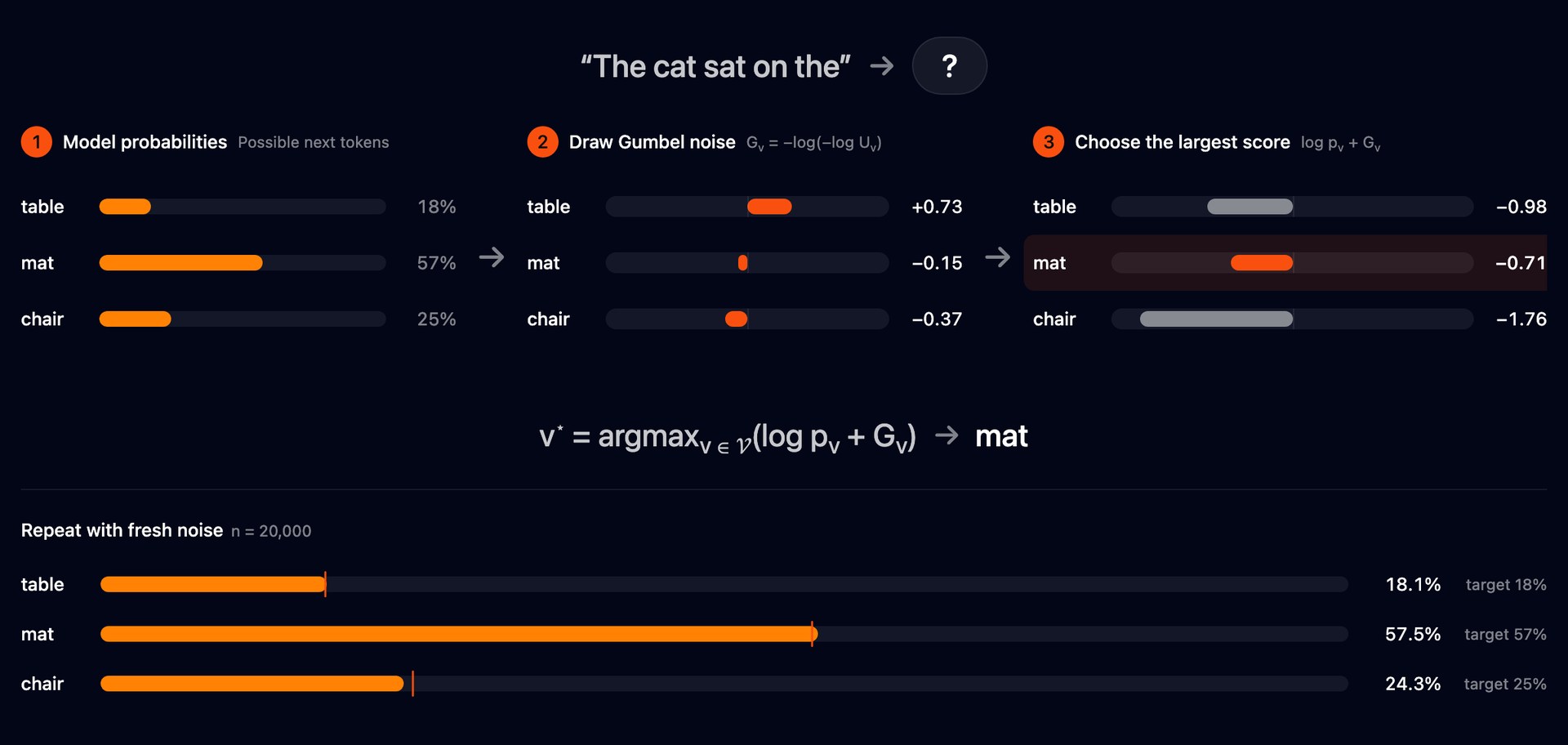
vLLM published a text-watermarking implementation on September 24 based on Gumbel-max sampling. The project describes the method as preserving the expected output distribution while introducing a signal that can later be detected. Its engineering work includes fused GPU kernels, support for speculative decoding, and measures intended to preserve output diversity.
Putting the mechanism inside a serving engine matters. Provenance can be established when participating systems generate content, rather than inferred afterward from whether a paragraph sounds like AI. The resulting signal still has a defined scope: it concerns output from the configured generator and its watermark scheme.
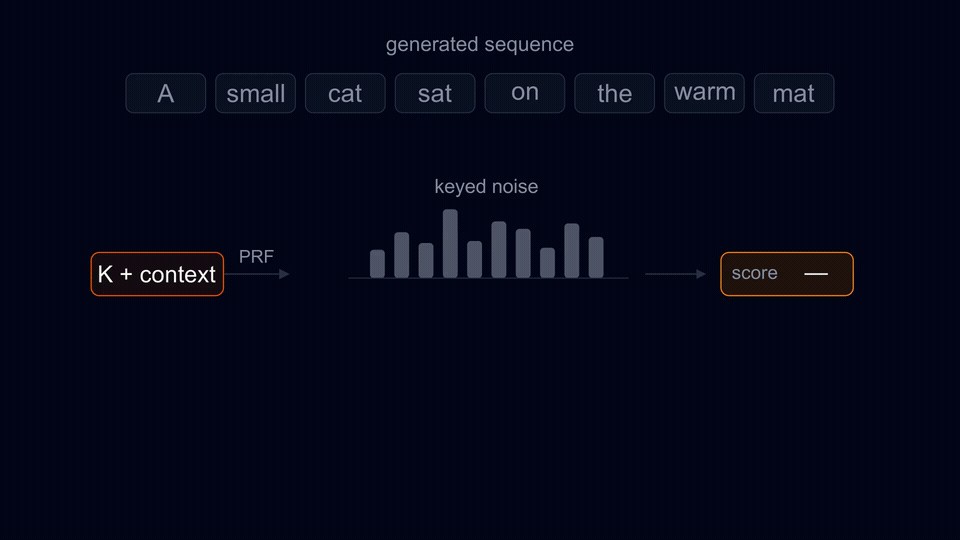
Detection needs a meaningful claim
A positive result should be described according to what the detector actually tests. It does not establish who published the text, whether its claims are correct, or whether a human edited it. Equally, an absent signal does not establish human authorship. The text may come from another generator or have lost detectable evidence through transformation.
A publisher evaluating the feature should create a test set that resembles its own workflow. Include original generated passages, shortened passages, copyedited passages, and mixtures of generated and independently written material. Measure false positives on material that the service did not generate.
Short snippets deserve separate attention. A detector has less evidence in a headline than in a long article. Reporting one accuracy figure across both can conceal a weakness in the exact format a customer wants to check. Decide how the interface communicates insufficient evidence before integrating the detector into an editorial process.
Operate the keys as infrastructure
A production deployment also needs a record of which model version, watermark configuration, and key were active at generation time. Rotating keys without retaining the information needed for legitimate historical checks can undermine the value of the system. Grant detection access according to the organization’s intended provenance workflow.
Performance testing should use the actual serving settings, including speculative decoding if it is enabled. A feature can be inexpensive in a simple example while behaving differently under long contexts, high concurrency, or frequent repeated prompts.
The vLLM work turns text watermarking into a concrete infrastructure option. Its strongest use is a carefully bounded provenance statement backed by measured detection behavior. A deployment should preserve that boundary and combine the signal with ordinary publication records, rather than letting a detector become an unsupported verdict about every piece of text.
Have a correction or a useful perspective?
Get in touch with the publication.

