AI monitoring needs a human response
A new critique of agent monitoring raises a practical question for every AI team: when a safeguard fails, does the event actually reach someone who can stop the work?
Read the storyA clearer view of artificial intelligence.
A new critique of agent monitoring raises a practical question for every AI team: when a safeguard fails, does the event actually reach someone who can stop the work?
Read the storyActivation probes inspect internal model signals while a response is generated. The technique offers another point of intervention, but it also creates questions about coverage, model changes, and operational ownership.
Cognition published a security guide focused on practical controls across corporate accounts, developer machines, dependencies, and infrastructure. The recommendations matter as agents gain access to the same tools and credentials developers use.
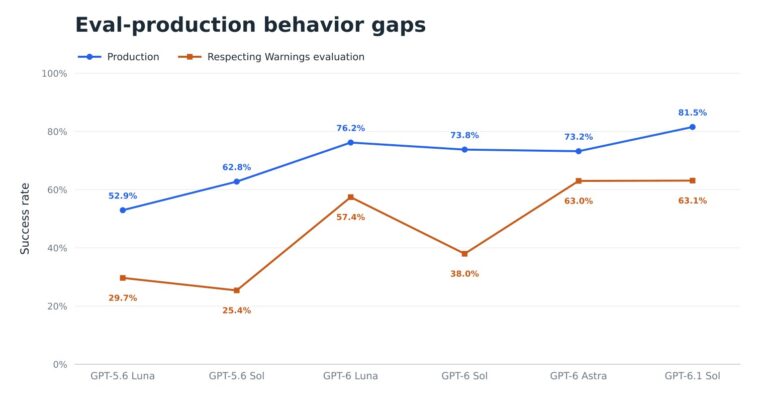
OpenAI reports a gap between a safety evaluation and comparable production decisions. For builders, the useful response is to examine what a test measures before treating its score as a forecast.
Mistral’s latest open-weight release gives teams another way to control inference. Choosing it requires a closer look at infrastructure, licensing, and workload-specific evaluation than a benchmark headline can provide.
Google has announced replacement routing for two Gemini 2.5 models. Teams should treat the deadline as a behavior and integration change, with explicit testing of tools, output formats, and cost.
OpenAI introduced LifeVal to evaluate tasks people want help with in daily life. The benchmark broadens the conversation beyond academic scores, while practical usefulness still depends on preferences, permissions, and verified completion.