Sierra introduced tau-Entity, a benchmark for a basic but demanding voice-agent task: accurately collecting information such as names, phone numbers, email addresses, and street addresses. The evaluation uses 200 tasks spanning ten kinds of entities and six languages.
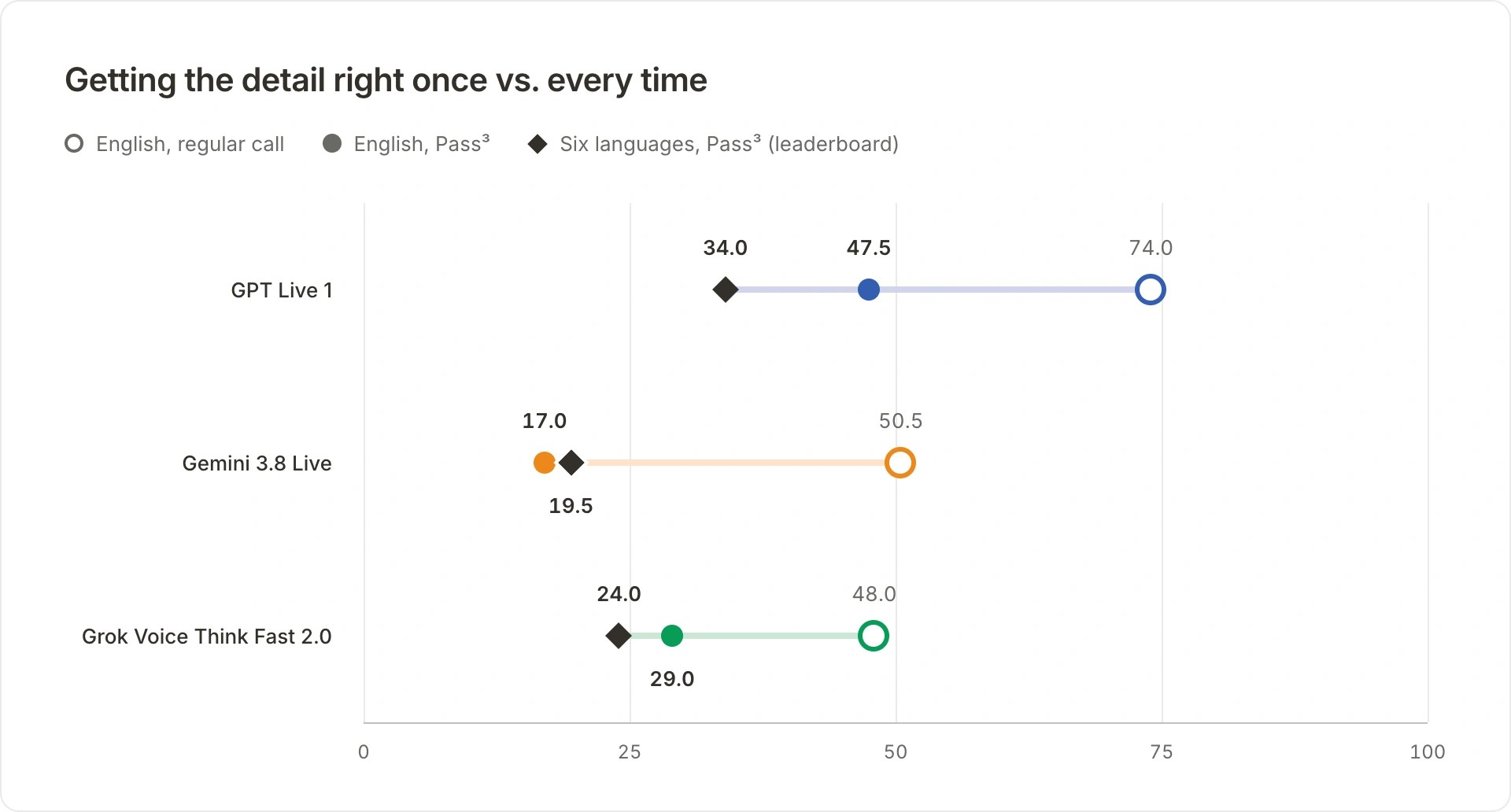
The benchmark checks exact field matches across regular and more difficult audio conditions. It also reports a repeated-success measure that requires a task to succeed in three runs. Sierra found that structured verification can improve performance, although additional confirmation increases conversation time. The result highlights a distinction between sounding fluent and recording the correct value.
One character can change the outcome
A conversational response can remain useful with a slightly awkward phrase. A single incorrect character in an email address may make the entire transaction fail. The standard of correctness should therefore depend on the type of information being collected, rather than the overall smoothness of the exchange.
A voice workflow should identify which fields have expensive downstream consequences. Delivery addresses, account identifiers, and callback numbers often warrant an explicit readback. A low-risk preference may not need the same interruption. Applying the same confirmation procedure to every field can make a system frustrating without improving the most important outcomes.
It also helps to distinguish hearing from understanding. A transcription may look plausible while referring to the wrong location or identifier. Where a reliable validation service is available, the system can check format or consistency before asking the caller to confirm. That check should assist the caller rather than silently replace what they said.
Evaluate correction, not just the first attempt
Real callers hesitate, change their minds, and correct earlier information. A practical test should include a correction after the agent has already repeated a value. The final stored record must reflect the caller's latest confirmed intent, with no stale field surviving elsewhere in the workflow.
Teams should track successful completion and total effort together. A longer call that reliably captures the right address may be preferable to a quick call followed by a failed delivery and a second support interaction. Repeated readbacks of already confirmed fields, however, would be avoidable friction.
Tau-Entity offers a focused way to examine a failure mode that broad conversational evaluations can miss. For buyers of voice automation, the useful demonstration is an accurate final record, including difficult examples and corrections, rather than a polished recording of the easiest conversation.
Have a correction or a useful perspective?
Get in touch with the publication.