Prime Intellect says it rebuilt Prime Agent from TypeScript in Rust with a large group of coding agents. Its October 9 account describes more than 2,000 agents working through the rewrite, supported by sandbox infrastructure and automated verification. The company reports faster startup and lower resource use, while also describing follow-up work after internal use uncovered remaining problems.
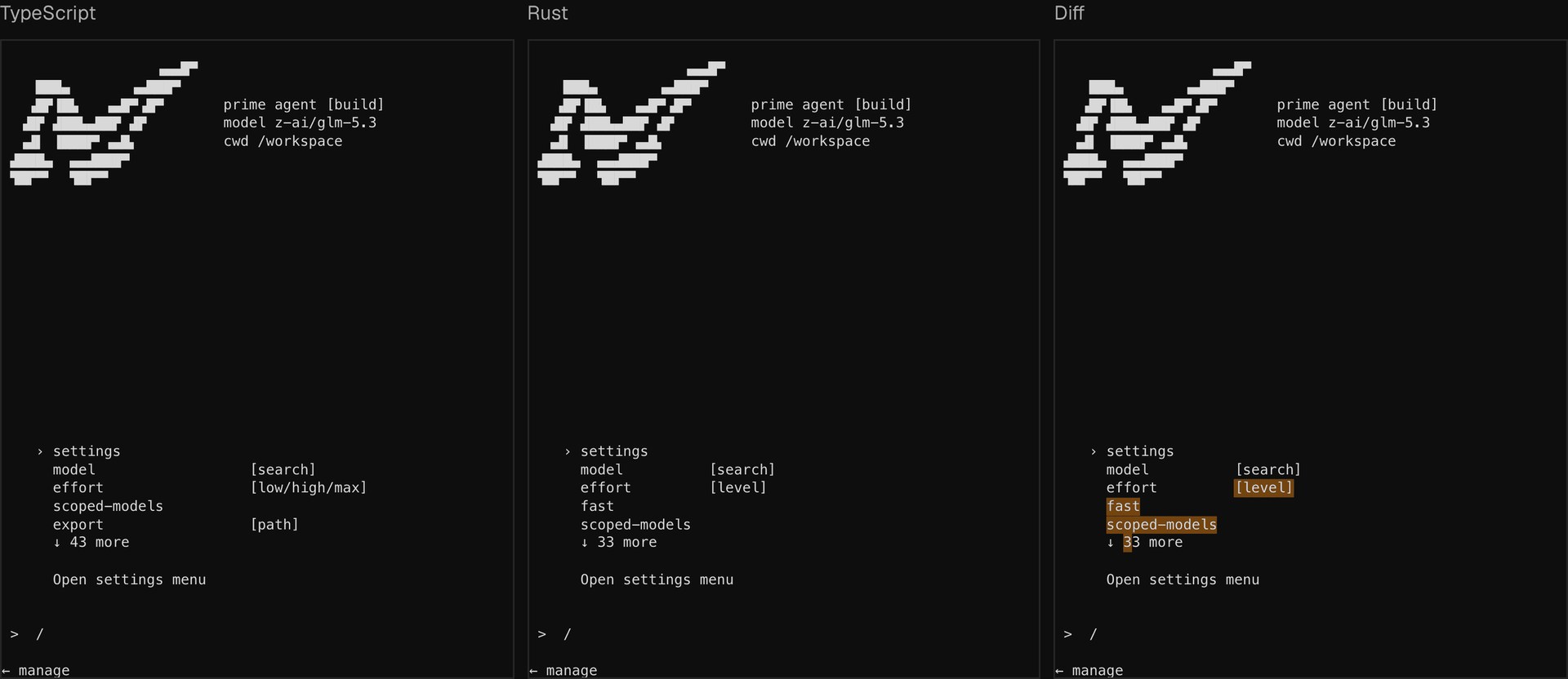
The scale attracts attention, but the more useful detail is how the team defined equivalence. It compared terminal behavior, session transcripts, requests to model providers, and protocol messages between the old and new implementations. Those checks made preserving the product a separate objective from merely compiling a Rust program.
A rewrite needs an observable contract
Existing software contains behavior that may never have been written into a specification. Users learn the timing of interactions, scripts depend on output formats, and integrations assume particular error responses. A language migration can improve internal structure while accidentally changing those outward contracts.
Before delegating a similar project, a team could record representative workflows from the current application. Include interruption, restart, invalid input, and recovery, not just a clean successful session. The resulting recordings become a reference for discussion when a new implementation behaves differently. They also expose decisions that require a human answer: which old quirks are compatibility requirements, and which should be deliberately removed?
Parallel work still needs an integration strategy
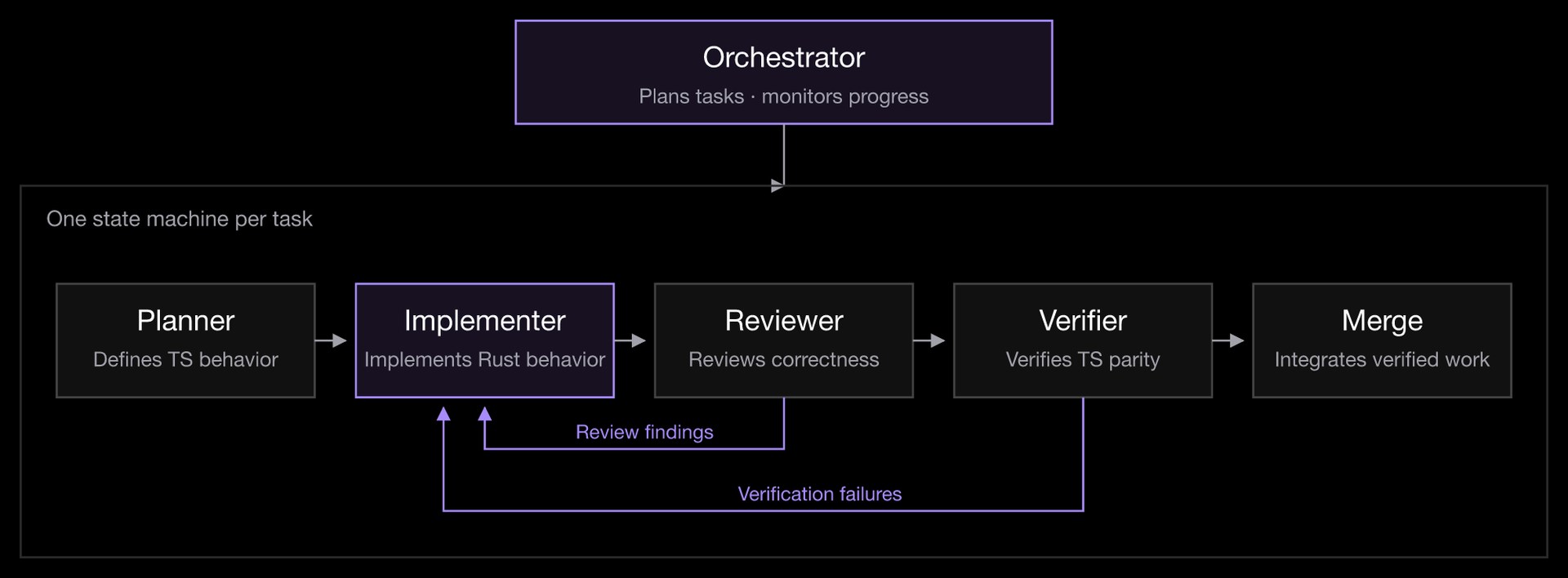
More workers can produce more changes, but their outputs converge on shared interfaces. If every worker changes an interface independently, the integration burden grows faster than the completed task count. A migration plan benefits from a dependency map, explicit ownership of shared types, and small units whose behavior can be checked independently.
Separate review contexts are useful, too. A reviewer should inspect the proposed result against the contract rather than inherit the implementer’s explanation as the starting truth. When a check fails, the task needs a precise return path: what differed, how to reproduce it, and which version served as the reference.
Performance is a second acceptance gate
Once behavior matches, performance comparisons should use the same environment and input sequence. Startup time, memory under a large session, and responsiveness during ongoing work reveal different limitations. A single headline speedup cannot represent all three.
Prime Intellect’s account supports an optimistic but specific conclusion: agents can participate in a substantial rewrite when the surrounding system gives them measurable targets and useful feedback. It does not show that verification becomes unnecessary. The work shifts toward defining the contract, maintaining the checks, and investigating the gaps that those checks do not yet cover.
Have a correction or a useful perspective?
Get in touch with the publication.