NVIDIA reported $115.8 billion in revenue for its third fiscal quarter, a 103% increase from a year earlier, as AI computing spending continued to drive its business. The quarter ended October 25, 2026. Results appeared on November 17 in the United States, or early November 18 in Beijing. [1]
Data center revenue reached $107.6 billion, up 110% year over year and representing roughly 93% of total sales. Company-wide revenue rose 20% sequentially. NVIDIA reported a GAAP gross margin of 74.8%. [1]
The cost of securing future capacity
NVIDIA’s supply commitments reached $390 billion, compared with $279 billion a quarter earlier. The CFO commentary attributes most of that increase to multiyear memory procurement. The $111 billion increase gives a sense of how far ahead the company is securing components. [2]
Cloud service agreements and data center lease commitments totaled another $102 billion, up from $74 billion. NVIDIA says that infrastructure supports its own research, including chip engineering, system testing and model development. The company describes the upcoming leases as not yet commenced, with starting dates extending from fiscal 2027's fourth quarter through fiscal 2033. [2]
A separate $32 billion category of neocloud agreements depends on partners obtaining financing and bringing computing capacity into operation for NVIDIA to accept. Commitments can shrink or disappear if those conditions are not met in time. The figures cover future obligations, so treating them as this quarter’s spending would overstate the cash already paid. [2]
Factories will take longer to arrive
A companion announcement dates some of the manufacturing expansion. Kinsus plans to raise the advanced package substrate capacity dedicated to NVIDIA at its Taoyuan campus to more than 3.5 times current levels. Production is expected to begin in the second half of 2027, with additional capacity planned for the third quarter of 2028. [3]
NVIDIA also described a multiyear, multibillion-dollar arrangement with SPIL to expand advanced packaging capacity in Taiwan by mid-2029. Separately, agreements with Amkor announced in July and October total nearly $3 billion and include prepayments for expansion in Arizona and South Korea. [3]
The factory schedules extend into 2028 and 2029, beyond the next quarterly forecast. More output depends on substrates and advanced packaging as well as chip manufacturing. For a customer planning an AI deployment, these expansion targets give useful context for future supply; an individual delivery date still has to come from the supplier. [3]
Fourth quarter forecast
NVIDIA forecasts fourth-quarter revenue of $130 billion, plus or minus 3%. That quarter includes an extra week, and the outlook assumes no data center compute revenue from China. Those qualifications matter when comparing the forecast against the completed quarter. [1]
That leaves different time horizons for people following the AI buildout. Quarterly sales measure business already recorded. A forecast reflects management’s expectations, while a factory expansion can take years to contribute capacity. Keeping those dates separate makes the scale of the numbers easier to interpret.
Sources
[1] NVIDIA Q3 fiscal 2027 financial results
[2] NVIDIA Q3 fiscal 2027 CFO commentary
[3] NVIDIA supply chain commitments and manufacturing schedules
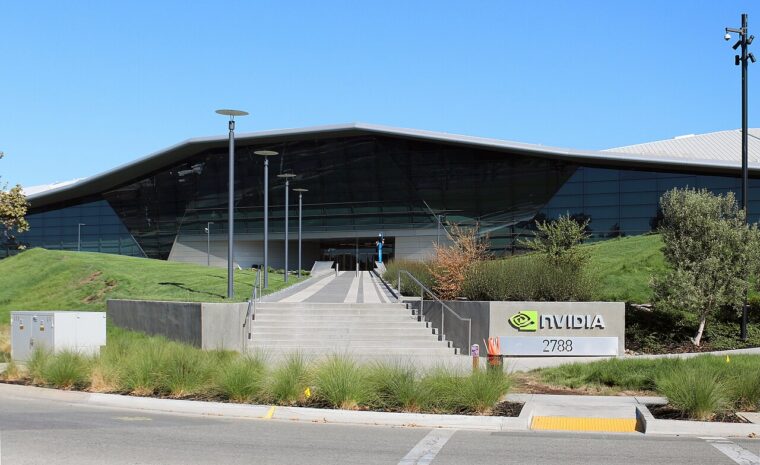
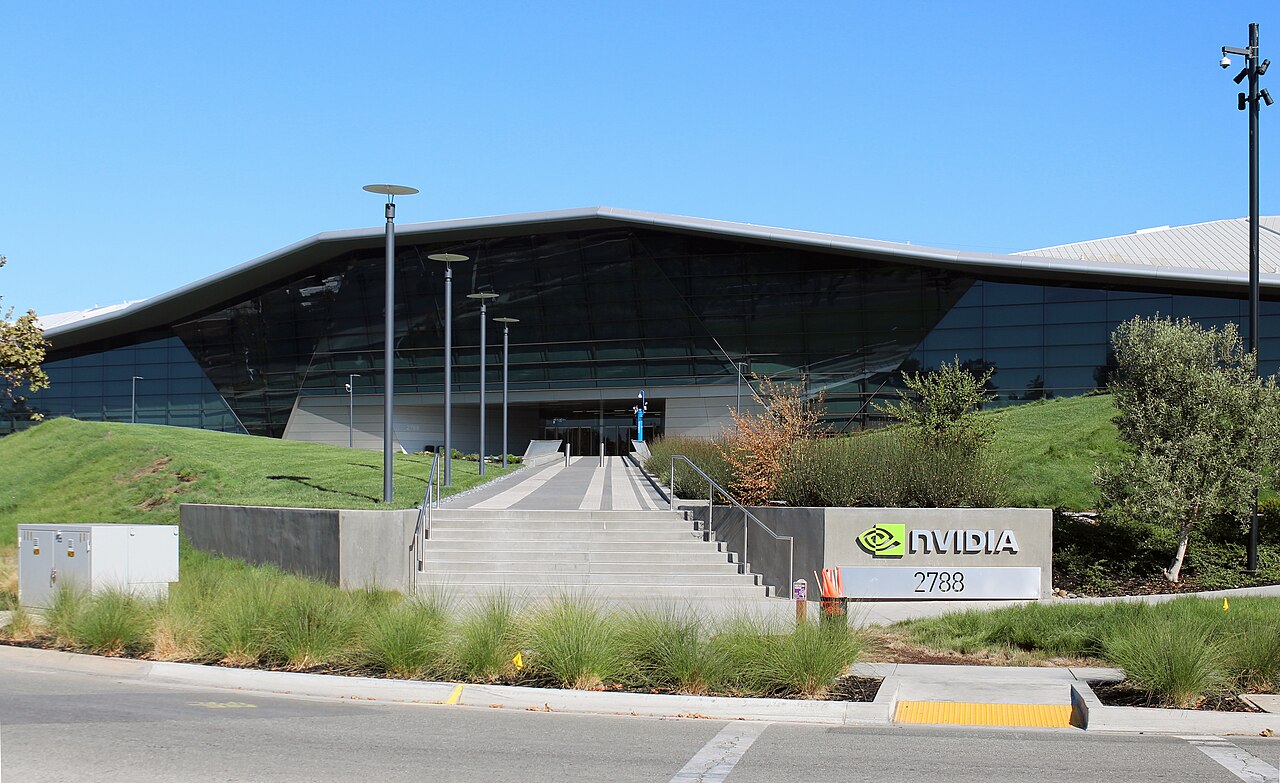
NVIDIA headquarters in Santa Clara, California, photographed August 4, 2018. Archive photograph; not a photograph of the newly announced manufacturing projects. Coolcaesar / Wikimedia Commons, CC BY-SA 4.0. Perspective, color correction and crop by Jacek Halicki; Wikimedia thumbnail resized. This image remains available under CC BY-SA 4.0. Image source. Image license / permission.
Have a correction or a useful perspective?
Get in touch with the publication.