Two teal chairs appear in one of Robbyant’s navigation examples. A pink vase stands beside one, a striped vase beside the other. An instruction naming the vase helps LingBot-Navi pick out the right chair even when its camera is looking down the corridor. The agent stores earlier views of a room in a three-dimensional memory. Robbyant has released its code and model weights, along with reconstructed workplaces where researchers can ask an agent to find an object, turn away and return to it later. [1][2][3][4]
Remembering where something was seen changes what a researcher can ask of an agent. A navigation test that starts from scratch for each instruction rewards finding a target during that particular trip. An agent working repeatedly in one office could use what it learned on a previous errand. But a memory also gives it an opportunity to be wrong in a new way. The fact that a bench was beside a doorway yesterday offers no guarantee that it will still be there on the next visit. Robbyant’s test data includes objects that change position for that reason. [1][3]
How earlier camera views become a spatial memory
LingBot-Navi takes visual features from images and attaches them to reconstructed surfaces. It groups the resulting information into local blocks that retain their own coordinate frames. The release example uses six recorded stretches of camera movement and 387 captured frames to build a memory containing 11,394 points after preprocessing. When a later instruction arrives, the agent can consult those earlier views alongside the part of the room its camera currently shows. [1]
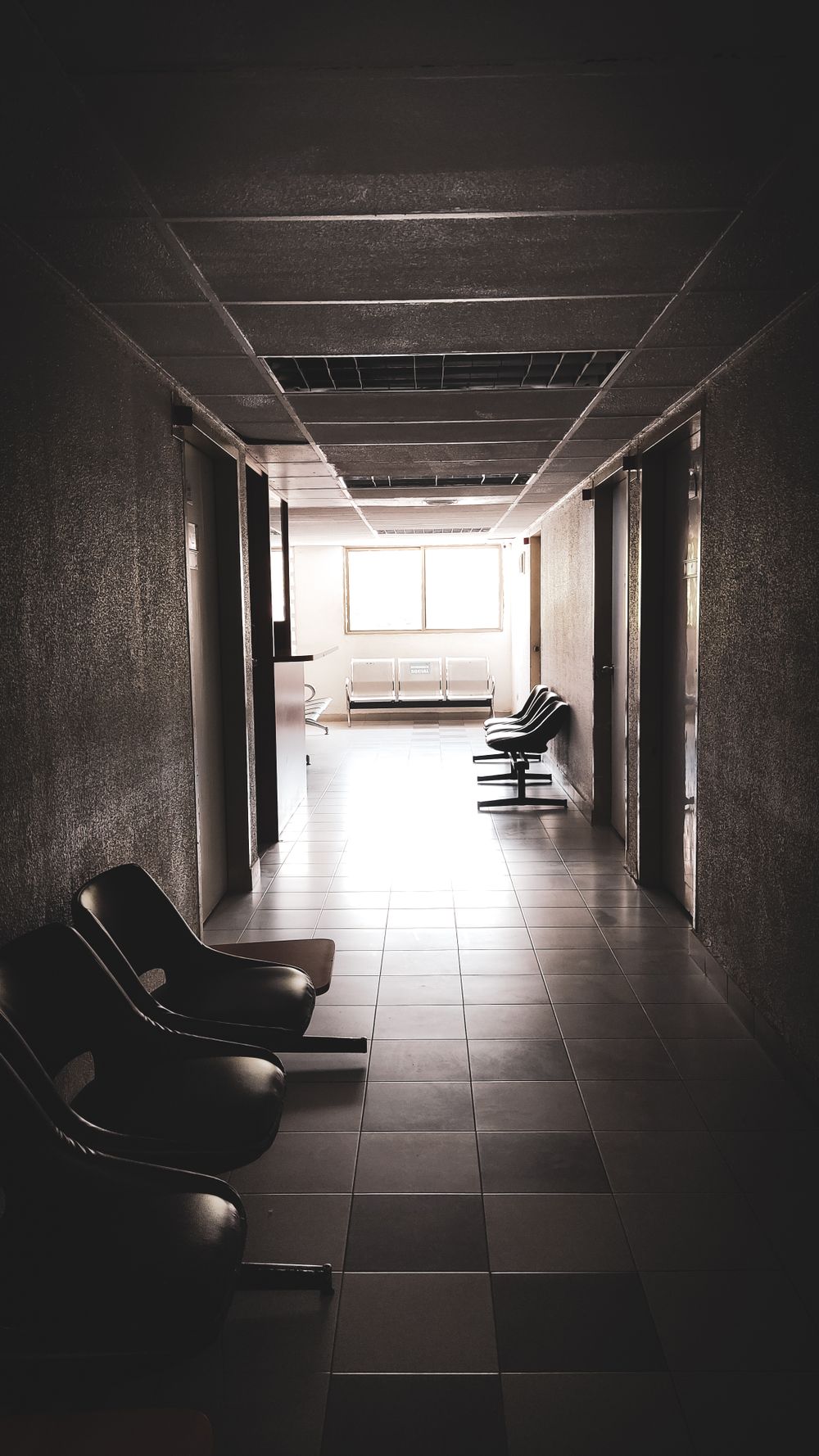
The chair example is a test of object grounding, the step that connects a description to a location. Both chairs are teal, but one is near a pink vase and the other is beside a striped one. The neighboring vase supplies the detail that the shared chair color cannot. A different example starts with an image looking down a corridor and asks the system to estimate where that picture was taken and which way the camera faced. Robbyant reports a position error of 0.374 meters and an orientation error of 4.42 degrees for this particular image. Those measurements describe this one documented image. [1]
The agent also has to place its own camera correctly. If it locates itself at the wrong end of the corridor, it could plan a route to the right chair from the wrong starting point. The navigation transformer, based on Qwen3.5-4B, ties the camera view and language to spatial memory. It predicts positions and poses as well as routes. Another set of weights handles local movement. That division gives researchers a way to tell a mistaken identification from a planner that failed to follow an otherwise sensible path. [1][2]
How the route demonstration works
For the route demonstration, Robbyant starts at the camera pose estimated in the corridor example and specifies a destination in an open area near a round table. Using the supplied memory, the system predicts 80 waypoints. The local planner uses a rendered view, its simulated pose and the route to choose whether to turn or move forward. It receives the next image after that movement. Its run stops three centimeters from the endpoint of the predicted route. That distance is measured against the route endpoint, which is important when interpreting the result. [1]
The three-centimeter figure comes from a simulation that moves the camera without modeling collisions. It shows how closely the planner followed that route. Testing a wide robot squeezing around furniture would also require accounting for its body and collisions. Robbyant also shows what happens with an incomplete memory. Given only the sixth block, the agent tries to locate a round dining table. If it cannot ground the request there, it predicts a point near the boundary of unexplored traversable space. Earlier views can therefore narrow the search to an unexplored boundary even if they never included the table itself. [1]
How the tests account for moved objects
The accompanying data includes 475 training scenes and 36 test scenes covering seven kinds of venue. Commercial and institutional locations together account for 53 percent of the scenes. Each reconstruction includes a representation for rendering color views, a mesh for depth and a two-dimensional grid marking the space through which an agent can travel. A rendered view can show an object on a wall. The navigation grid helps establish which floor space the agent could cross to reach it. [3]
Tests cover 360 static sequences and 150 dynamic chains. In the dynamic portion, the researchers use 45 object models and provide annotations for 193 pairs of placements, recording an initial position and a subsequent one. Of the 1,105 instructions in those chains, 225 refer back to a target that appeared earlier in the same chain. Returning to an object can reward an agent for remembering, or expose a stale memory if the object has moved. By including return visits, the test can check whether the agent updates what it remembers after an object moves. [3]
Robbyant also publishes reference results for a subset, averaging success across episodes and reporting a separate success measure weighted by path length. Its LingBot-Navi subset configuration used the first episode from each of 36 scenes, allowed 1,000 initial exploration steps and returned 48.75 percent success and 26.22 percent on the path-weighted measure. The corresponding GOAT subset used 200 initial steps and returned 68.26 percent and 38.26 percent. Researchers comparing those results need to account for both the environment and the amount of initial exploration. Neither row supplies a general success rate for an office robot. [1]
A lab can try the supplied memory before deciding how much of the scene collection to download. The test scenes are available as one archive, while the 475 training scenes are distributed across thirteen others. The terms also differ between parts of the release. Robbyant lists its navigation and local planner weights under Apache 2.0. The dataset uses a noncommercial, share-alike license, with separate terms for third-party objects in the test archive. A team evaluating the model for a commercial robot will need to account for which of those materials it intends to use. [1][2][3]
Sources
[1] Robbyant’s release documentation and benchmark results
[4] Robbyant’s release announcement
[5] Robbyant’s current project documentation
Have a correction or a useful perspective?
Get in touch with the publication.