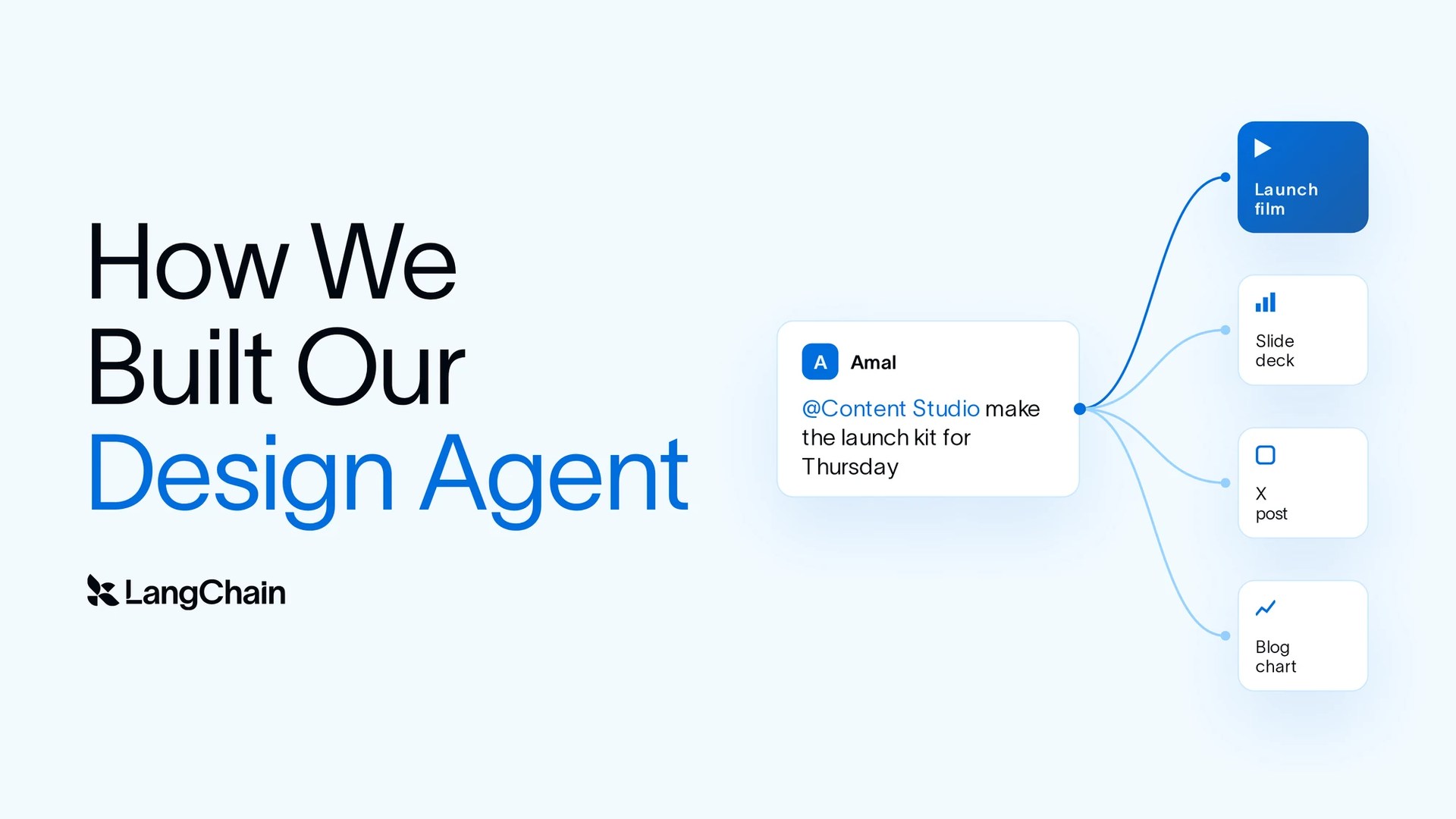
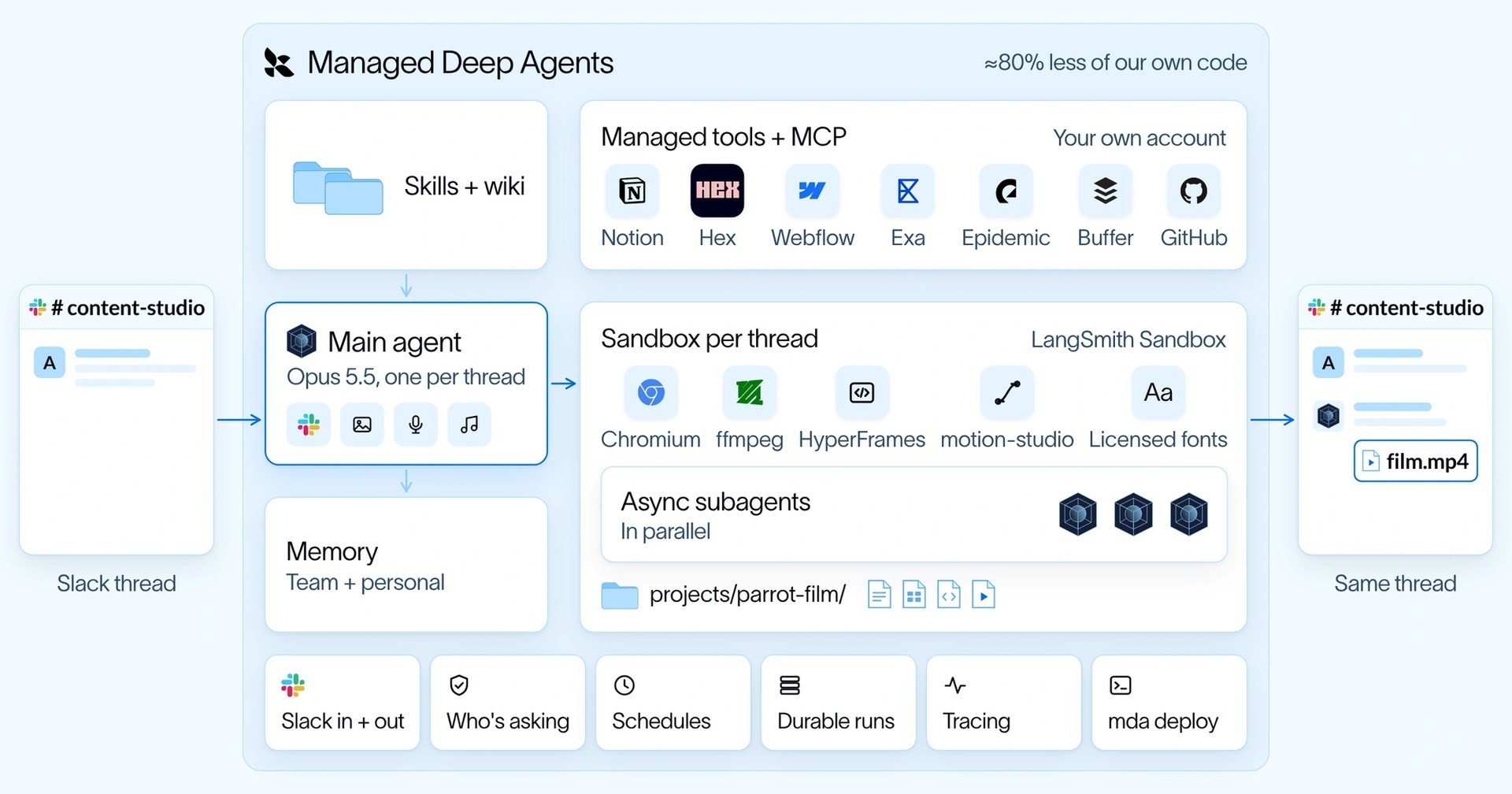
LangChain described Content Studio, an internal agent for producing design assets such as social graphics, slides, and videos. The workflow begins in Slack and uses a persistent sandbox for each thread, allowing work to continue across requests instead of starting from an empty environment every time.
The company shared an open-source harness and described using specialized skills, brand context, asynchronous subagents, and progress updates. Outputs are prepared for review before publication. LangChain also discussed removing old workarounds as model capabilities improve, treating the surrounding system as something that needs continuing maintenance.
Preserve decisions, not just examples
A creative assistant needs to understand why a team chooses a particular visual treatment. A folder of finished images can show what the brand looks like, but it may not explain which rules are essential and which were specific to one campaign.
Reusable guidance should distinguish fixed requirements from optional preferences. Logo clear space and accessibility requirements may be mandatory. A particular illustration style may be appropriate only for a certain audience. Encoding that distinction makes it easier for an agent to adapt a design without flattening every project into the same template.
The persistent-workspace approach also creates an opportunity to preserve edits. When a designer corrects a headline hierarchy or changes an export setting, the next iteration should build on that decision. Repeatedly undoing human corrections would erase much of the time saved by generation.
Review the rendered result
Code-based assets can be easy to modify and automate, but correct source files do not guarantee a good final image or video. Review should inspect the rendered artifact at the size and format in which it will be used. Overflow, tiny text, awkward timing, and poor contrast can remain invisible in a source-level check.
For a meaningful pilot, choose a recurring asset with a stable brief. Compare the time from request to an approved export, including revisions and designer intervention. Counting generated variations alone would reward volume even if most versions require substantial cleanup.
Teams should also decide when a workflow needs a reset. A persistent sandbox that accumulates obsolete assets and instructions can become harder to reason about. Clear project boundaries and a concise record of accepted decisions help keep continuity useful.
Content Studio offers a practical example of an agent fitting into a creative process. The interesting achievement is the combination of reusable context, editable output, and a human review point that can turn a generated draft into something a team is willing to publish.
Have a correction or a useful perspective?
Get in touch with the publication.