
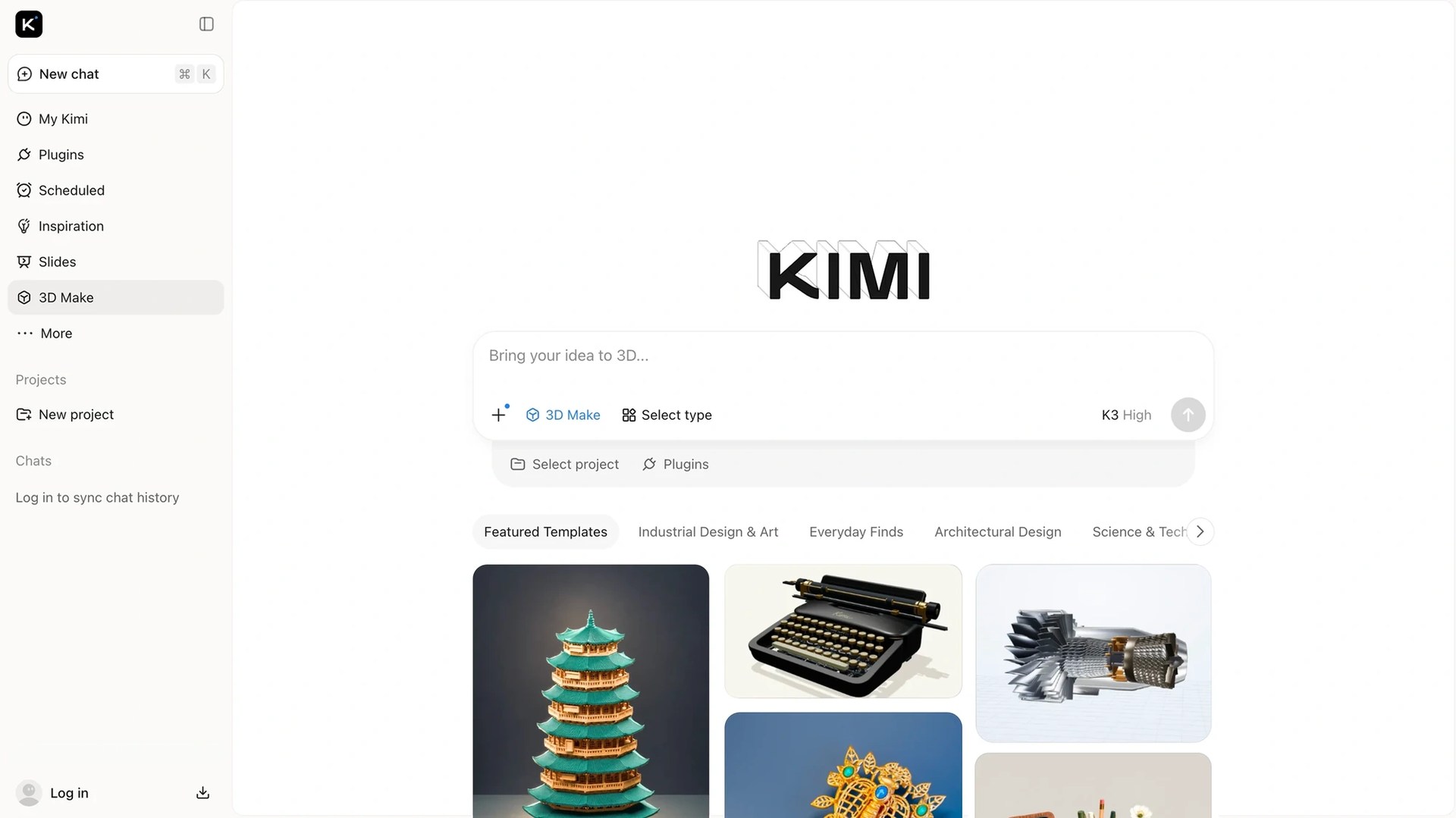
Moonshot AI introduced Kimi K3.1 Pro, the first model in its K3.1 series, with a one-million-token context window. The company also announced a Highspeed variant and described improvements in coding, 3D creation, and other work that involves multiple tools and extended execution.
The models were announced for Kimi's consumer, work, coding, and API products. At the time of the announcement, full model weights were scheduled for release by November 4. Moonshot's reported benchmark results and demonstrations describe the company's own evaluation; they are not independent evidence that every large project will succeed without supervision.
A larger window changes what can be attempted
A long context window can make it possible to supply a wider set of documents or more of a codebase in one task. That is useful when the answer depends on relationships across files. It does not remove the need to distinguish current requirements from obsolete notes or authoritative specifications from informal suggestions.
A team evaluating the model should deliberately include conflicting information. Put an outdated requirement beside the current one and ask the system to identify which governs the work. This reveals whether the extra capacity supports judgment or merely allows more contradictory material to enter the conversation.
Retrieval quality still matters. A smaller, well-selected input may produce a more reliable result than a maximal upload whose important constraints are buried. Compare both approaches on the same tasks before deciding that every request should use the largest available context.
Inspect the artifact at its destination
For coding work, compilation and tests provide evidence that prose summaries cannot. For a 3D asset, inspect geometry, dimensions, materials, and the target export format. The fact that a model can describe a successful operation is different from the receiving application accepting the output.
Speed should also be evaluated as time to an accepted result. A faster variant may be valuable for interactive iterations even if a slower setting remains preferable for a difficult final pass. The comparison should include corrections, tool execution, and human review instead of measuring generation alone.
K3.1 Pro adds another option for teams exploring substantial agent tasks. Its most informative trial will be a bounded project with a realistic input bundle and a clear definition of completion, followed by a comparison of cost, reliability, and the effort required to make the result usable.
Have a correction or a useful perspective?
Get in touch with the publication.

