
Understanding AI in Simple Business Terms
Artificial Intelligence (AI) is becoming a normal part of how online businesses work today. You do not need a technical background to understand it. In simple terms, AI refers to digital tools that help people complete tasks faster, organize information, and make better decisions online. For beginners, AI is not something complicated or intimidating. It is simply another form of technology designed to support everyday online work.
This broader connection is explained in detail in our foundational guide on Technology and Online Business – The Complete Beginner’s Guide, where the full relationship between digital systems and online business is explained step by step.
What AI Means for Online Business Beginners
For beginners, AI means assistance. It helps with writing, organizing tasks, answering customer questions, analyzing basic data, and improving efficiency. Instead of doing everything manually, AI tools help reduce workload and save time. This allows beginners to focus on learning, improving skills, and building their online presence step by step.
AI does not replace effort or learning. It supports beginners by making common online business tasks easier to manage, even with limited experience.
Why AI Tools Are Now Part of Everyday Online Work
Online work has grown more competitive and fast-paced. AI tools are now used because they help people work smarter, not harder. Many tasks that once took hours can now be completed in minutes with the help of AI. This includes content drafting, basic customer communication, scheduling, and performance tracking.
As online businesses continue to grow, AI has become part of everyday digital workflows, just like email, websites, and online platforms.
How This Topic Connects to Technology and Online Business as a Whole
AI tools are not separate from technology or online business. They are a natural extension of how digital work has evolved over time. Just as the internet and software changed how people work online, AI is another layer that builds on those foundations.
To understand this topic fully, it helps to see AI as one piece within the larger picture of how technology supports online business growth. This broader connection is explained in detail in Technology and Online Business – The Complete Beginner’s Guide, which provides the foundation for understanding how tools like AI fit into modern online work.
Online Business Before AI Tools

Before AI tools became common, online businesses relied heavily on manual work and basic digital tools. People used simple software, spreadsheets, email, and human effort to manage daily tasks. While online business was still possible, it required more time, patience, and constant attention.
How Online Businesses Worked Without AI
Without AI, most online tasks were handled by people from start to finish. Writing content, replying to customer messages, organizing data, and managing schedules all depended on human input. Decisions were often based on experience or trial and error rather than automated insights.
For beginners, this meant learning many skills at once and spending long hours completing repetitive work.
Tasks That Required More Time and Manual Effort
Many common tasks took much longer before AI tools existed. Content creation required drafting and editing everything manually. Customer support depended on checking messages one by one. Data analysis involved reviewing numbers without automated summaries or suggestions.
Even simple activities like organizing files, tracking performance, or planning work schedules demanded extra effort and focus.
Limitations Businesses Faced Before AI Adoption
Before AI, online businesses faced clear limitations. Growth was slower because time and energy were limited. Small teams struggled to compete with larger businesses that had more staff. Mistakes were more common due to fatigue and lack of automation.
For beginners, these limitations often caused frustration and burnout. Progress depended heavily on personal capacity rather than smart tools that could support and scale the work.
What Changed When AI Tools Appeared

When AI tools appeared, online business did not suddenly become automatic or effortless. Instead, the way people worked began to change gradually. Tasks that once took many hours could now be done faster, with better support and fewer mistakes. AI became a helper, not a replacement.
H3: From Manual Work to Assisted Digital Work
Before AI, most online work depended fully on manual effort. After AI tools became available, people started working with assistance rather than alone. Writing, organizing, researching, and planning could be supported by smart tools that reduced repetitive work.
This shift allowed business owners and freelancers to focus more on thinking, creativity, and decision-making, instead of spending all their time on routine tasks.
How AI Simplified Daily Business Tasks
AI tools simplified many everyday activities in online business. Drafting content became faster. Sorting data became easier. Customer messages could be organized more clearly. Planning tasks and schedules required less effort.
For beginners, this meant less overwhelm. Instead of learning everything at once, they could use AI as a guide while still building their own skills step by step.
Why AI Does Not Replace Humans but Supports Them
AI does not understand goals, values, or context the way humans do. It follows instructions and patterns, but it cannot fully replace human judgment, creativity, or responsibility. Successful online businesses still depend on people making decisions and setting direction.
AI works best as a support system. It helps people work smarter, not independently. When used correctly, it strengthens human effort instead of removing it.
Common Types of AI Tools Used in Online Business Today
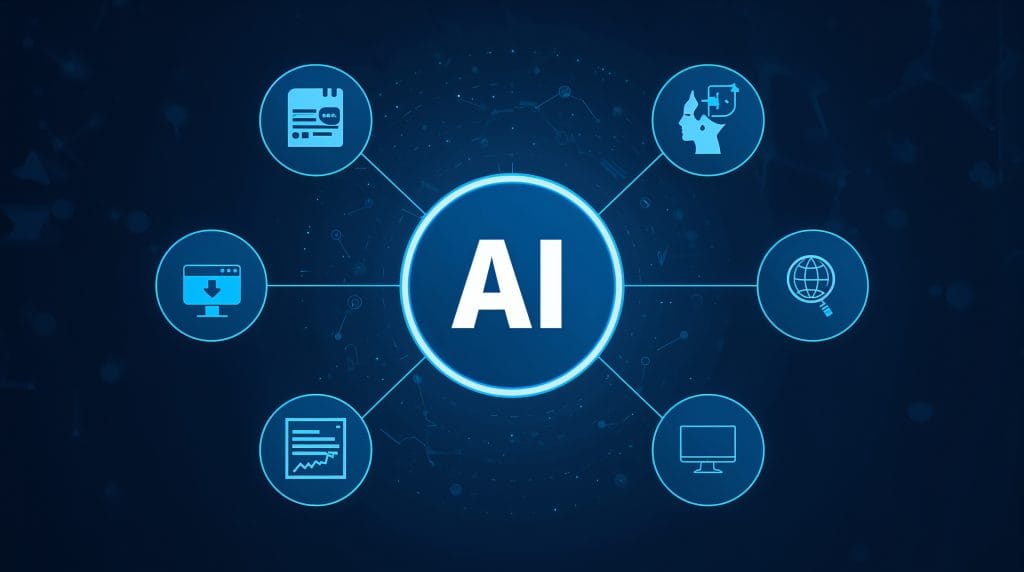
AI tools are now used in many parts of online business. They are not limited to one task or industry. Instead, they support different areas of work, helping people save time and work more efficiently. Below are the most common types of AI tools beginners often encounter.
AI Tools for Content Creation and Writing
Many online businesses use AI tools to support writing and content creation. These tools help generate ideas, improve sentence clarity, and organize written information. They are often used for blog drafts, product descriptions, emails, and social media posts.
For beginners, this reduces the fear of starting with a blank page. However, human review is still important. People must check tone, accuracy, and relevance before publishing anything.
AI Tools for Customer Support and Communication
Some AI tools assist businesses in handling customer questions and messages. They can help sort inquiries, suggest responses, or provide basic information automatically. This makes communication faster, especially for small businesses with limited staff.
These tools do not replace human support. Instead, they handle simple tasks so people can focus on more complex customer needs and relationship building.
AI Tools for Data Analysis and Decision Support
Online businesses often deal with large amounts of information. AI tools can help organize data, highlight patterns, and summarize results in a simple way. This supports better decision-making without requiring advanced technical skills.
For beginners, this means they can understand performance trends more easily and make informed choices, rather than guessing or relying only on intuition.
How AI Tools Are Used in Different Online Business Activities

AI tools are used across many daily online business activities. They do not work as independent decision-makers. Instead, they assist people by reducing workload, saving time, and improving consistency. Below are common ways AI is used in different areas of online business.
Using AI in Marketing and Online Promotion
In marketing, AI tools help businesses understand what content performs well and how audiences respond. They can assist with idea generation, headline suggestions, and content scheduling. Some tools also help analyze engagement data to see which messages attract more attention.
For beginners, this makes marketing more manageable. It reduces guesswork and helps people focus on clear, data-based decisions rather than assumptions.
Using AI to Manage Tasks, Time, and Productivity
Many online workers use AI tools to organize daily tasks and manage time more effectively. These tools can help prioritize work, track progress, and reduce repetitive manual steps. This is especially helpful for freelancers and small teams working alone or remotely.
AI does not replace discipline or planning. It simply supports better structure so people can focus on meaningful work instead of constant organization.
Using AI to Improve Customer Experience
AI tools are also used to improve how businesses interact with customers. They help respond faster, organize customer messages, and identify common questions. This leads to smoother communication and more consistent service.
Human involvement remains important. AI supports the process, but trust and relationships are still built through thoughtful human responses and clear communication.
How AI Lowered Barriers for Online Business Beginners

AI tools have made it easier for beginners to enter online business. In the past, people needed many technical skills, large budgets, and long learning periods. Today, AI helps simplify many of these challenges, making online business more accessible to a wider audience.
This shift connects directly with our article on Why Online Business Has Low Entry Barriers for Beginners, which explains how technology continues to reduce startup complexity for individuals and small teams.
Starting an Online Business with Fewer Skills
Before AI, beginners often needed strong writing, design, or technical skills to start an online business. AI tools now assist with these tasks by offering guidance, suggestions, and basic support. This allows beginners to focus on ideas, planning, and learning step by step.
AI does not remove the need to understand the business itself. It simply helps beginners get started without feeling overwhelmed by technical requirements.
Reducing Costs and Learning Curves with AI Tools
Many AI tools help reduce early costs. Tasks that once required hiring specialists can now be supported with affordable tools. This is especially helpful for beginners with limited budgets who want to test ideas before investing heavily.
AI also shortens the learning curve. Instead of spending months learning complex systems, beginners can use simple interfaces that guide them through basic tasks while they continue learning gradually.
Why Individuals and Small Teams Benefit Most
Individuals and small teams often have limited time and resources. AI tools help them manage multiple roles more efficiently, such as planning, organizing, and communicating. This support allows small operations to function more smoothly without large teams.
AI does not replace effort or decision-making. It supports people by reducing repetitive work so they can focus on growth, quality, and long-term improvement.
Benefits of AI Tools in Online Business

AI tools have become helpful assistants for many online businesses. They do not replace human effort or decision-making, but they support daily work in practical ways. When used correctly, AI helps businesses work smarter and more consistently over time.
Saving Time and Increasing Efficiency
One of the main benefits of AI tools is time savings. Many routine tasks that once took hours can now be supported or sped up with AI assistance. This allows business owners to focus more on planning, customer needs, and improving their services.
By reducing repetitive work, AI helps online businesses use their time more efficiently without increasing workload pressure.
Improving Consistency and Quality of Work
AI tools can help maintain a steady level of quality in everyday tasks. They support consistent formatting, structured output, and basic checks that reduce simple mistakes. This is especially useful for businesses that publish content, manage communication, or handle regular updates.
Consistency does not mean perfection. Human review and judgment are still important, but AI helps create a more stable workflow.
Helping Businesses Scale Gradually
As online businesses grow, workloads often increase faster than resources. AI tools help businesses handle gradual growth without making sudden changes. They support expansion by assisting with larger volumes of tasks while keeping processes organized.
This gradual scaling allows businesses to grow responsibly, without overextending budgets or teams.
Limitations and Challenges of Using AI Tools
While AI tools offer many advantages for online businesses, they also come with clear limitations. Understanding these challenges helps beginners use AI responsibly and avoid unrealistic expectations. AI works best when it supports human effort, not when it replaces it.
We explore this principle more deeply in Why Technology Is a Tool — Not a Shortcut to Online Business Success, where we explain how tools amplify structure rather than replace it.
Dependence on Technology and Internet Access
AI tools rely heavily on stable technology and internet access. When systems are slow, unavailable, or disrupted, work can be delayed. This dependence means businesses should always be prepared for technical issues and have simple backup plans when possible.
Online work supported by AI still needs reliable devices, software updates, and basic digital skills to function smoothly.
The Need for Human Judgment and Creativity
AI tools can assist with tasks, but they do not fully understand context, emotions, or long-term goals. Human judgment is still essential for decision-making, ethical choices, and creative thinking. AI may suggest options, but people decide what is appropriate and meaningful.
Creativity, strategy, and personal insight remain human strengths that AI cannot replace.
Why AI Tools Still Require Guidance
AI tools do not work independently without direction. They need clear input, review, and correction. Without guidance, AI-generated outputs can be inaccurate, generic, or unsuitable for specific business needs.
Successful online businesses treat AI as a support tool. They guide it, monitor results, and improve outcomes through human oversight.
Common Misconceptions About AI in Online Business
As AI tools become more visible in online business, many beginners form incorrect assumptions about what AI can and cannot do. These misconceptions often lead to disappointment or unrealistic expectations. Understanding the truth helps people use AI in a smarter and more sustainable way.
“AI Guarantees Instant Success”
One common belief is that using AI automatically leads to fast results. In reality, AI does not guarantee success on its own. It can save time, improve efficiency, and support decision-making, but results still depend on planning, effort, and consistency.
Online businesses grow through learning, testing, and improvement. AI can assist in this process, but it does not remove the need for patience or long-term work.
“AI Replaces All Human Work”
Another misconception is that AI replaces people completely. AI tools are designed to assist humans, not replace them. They help with repetitive tasks, basic analysis, or content drafts, but human input is still required for strategy, creativity, and final decisions.
Successful online businesses combine human thinking with AI support. The best results come from collaboration between people and technology.
“You Must Be Highly Technical to Use AI”
Many beginners believe AI is only for experts or programmers. In reality, most modern AI tools are built to be user-friendly. They often use simple interfaces and clear instructions, making them accessible to people with basic digital skills.
You do not need advanced technical knowledge to start using AI. Learning gradually and using simple tools is enough for most online business tasks.
Real-Life Examples of AI Use in Online Business

AI tools are already part of everyday online work. Many businesses use them quietly in the background to save time, improve quality, and manage tasks more efficiently. Below are simple, real-life examples that beginners can easily relate to.
Freelancers Using AI to Speed Up Work
Many freelancers use AI as a support tool rather than a replacement. Writers use AI to generate ideas, outlines, or first drafts, then improve the content themselves. Designers use AI-powered tools to create quick mockups or improve images. Virtual assistants use AI to summarize emails, organize information, or draft simple responses.
In these cases, AI helps freelancers work faster and focus more on quality. The final work still depends on human skills, experience, and judgment.
Small Websites Using AI for Content Support
Small websites often use AI to support content creation and website management. AI tools help with keyword suggestions, topic ideas, basic grammar checks, and content structure. Some site owners use AI to generate meta descriptions or organize long articles more clearly.
AI does not run the website by itself, but it helps reduce the workload. This allows small website owners to publish content more consistently without needing a large team.
Online Stores Using AI for Customer Interaction
Many online stores use AI to improve customer communication. Chatbots answer common questions, such as shipping details or product availability. AI tools also help suggest products based on customer behavior or browsing history.
These tools improve response time and customer experience, especially for small stores that cannot provide 24/7 human support. Human involvement is still important for complex issues and final decisions.
Frequently Asked Questions (FAQ)
Do online businesses need AI to succeed?
If you are still building your foundation, you may want to review How Beginners Can Use AI Tools Responsibly for Online Work to understand where AI fits in the early stages.
Can beginners use AI tools safely and easily?
Yes, most AI tools today are designed for beginners. They usually have simple interfaces and clear instructions. Beginners can use AI safely by starting with basic features and reviewing all outputs before using them. Human judgment is always important. AI suggestions should be checked, edited, and used responsibly.
Are AI tools expensive for small businesses?
Many AI tools are affordable, and some offer free plans or low-cost options. Small businesses can start with basic tools and upgrade only when needed. AI does not require a large budget to be useful. With careful selection, even individuals and small teams can benefit without high costs.
AI as a Support Tool in Modern Online Business

Conclusion
Key takeaways for beginners
AI tools have become a normal part of modern online business. They help with writing, communication, organization, customer support, and decision-making. For beginners, the most important point is that AI reduces effort, not responsibility. It makes work more manageable, especially when time, skills, or resources are limited. Used correctly, AI supports learning, improves efficiency, and helps people work more confidently online.
Why AI is a tool, not a shortcut
AI does not guarantee success, fast growth, or easy income. It cannot replace clear goals, consistent effort, or good judgment. AI works best when humans guide it. The quality of results still depends on how tools are used, reviewed, and applied. Successful online businesses use AI as assistance, not as a replacement for thinking, planning, or creativity.
Natural bridge back to the pillar page topic
AI is just one part of the larger technology ecosystem that powers online work today. To fully understand how AI fits alongside the internet, software, platforms, automation, and digital tools, it helps to see the bigger picture. This broader foundation is explained in Technology and Online Business – The Complete Beginner’s Guide, which connects all these concepts together and shows how technology supports modern online opportunities step by step.




5 Comments on “How AI Tools Are Used in Online Business Today (Simple Explanation)”