
Introduction
Why Responsible AI Use Matters for Beginners
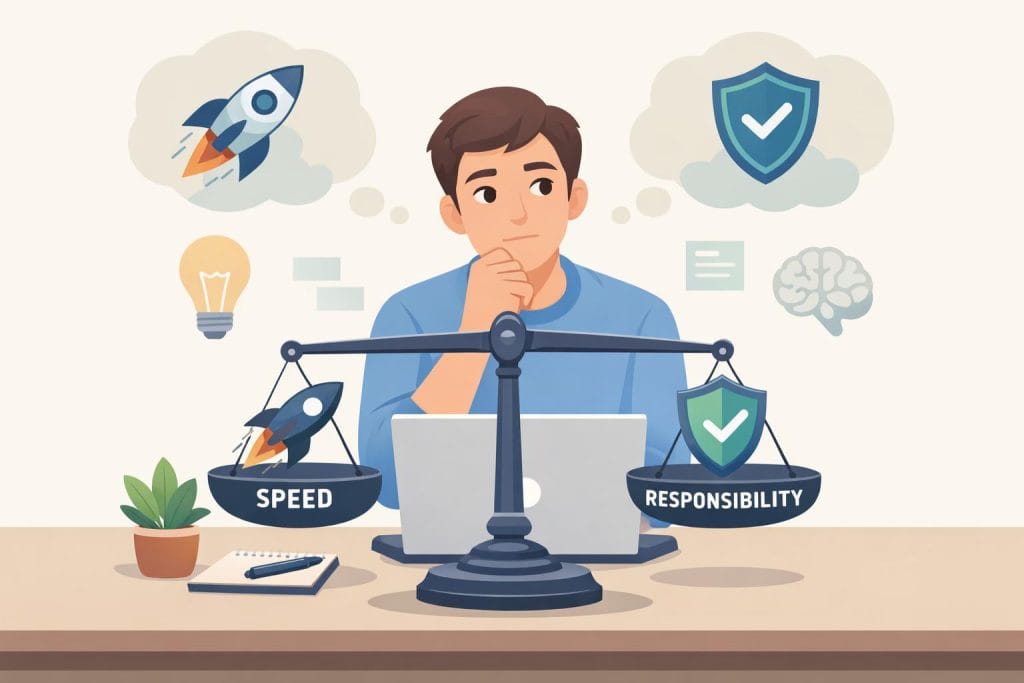
Artificial intelligence is now part of everyday online work. From writing simple content to organizing ideas and saving time, AI tools are becoming common across many digital tasks. For beginners, this can feel exciting, but also confusing. With so many tools available, it is easy to misunderstand what AI can truly help with and where human effort is still essential.
This is why responsible use of AI matters, especially for those just starting out. AI is not a replacement for learning or effort. It is a support tool that works best when used with care, understanding, and clear purpose. This article explains how beginners can use AI tools in a healthy, practical way for online work.
The Growing Role of AI in Everyday Online Work
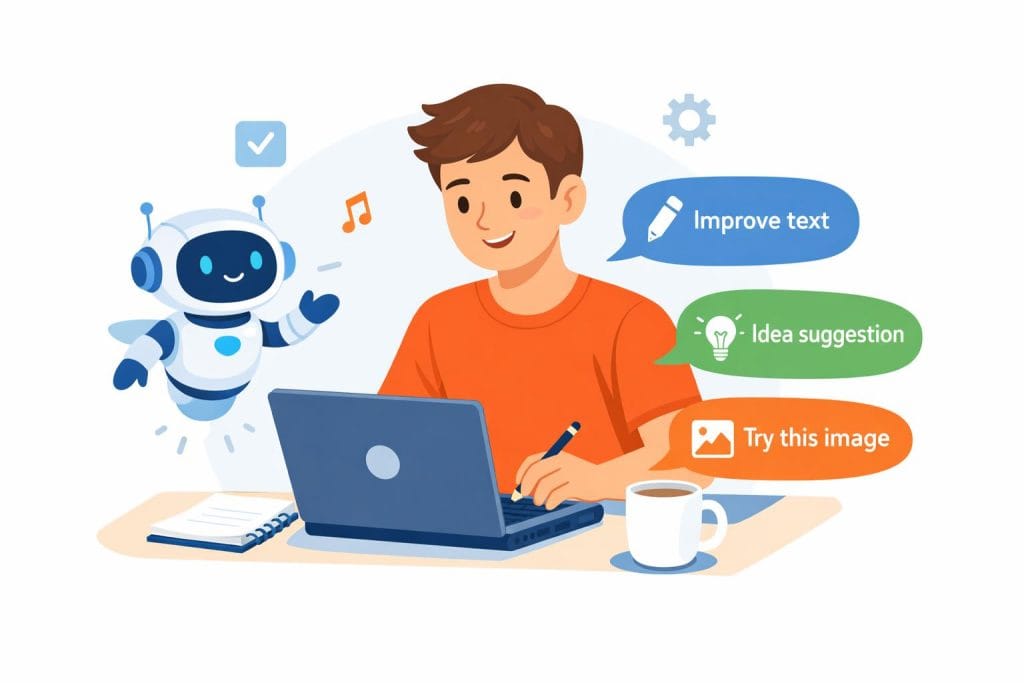
AI tools are now used in many simple online tasks. Beginners use them to draft content, generate ideas, improve clarity, and organize information. Freelancers use them to save time. Content creators use them to stay consistent. Even small online projects rely on AI to reduce repetitive work.
This growth did not happen overnight. It is part of a larger shift in technology that made online work easier and more accessible. AI fits into modern digital workflows as an assistant, not as a system that replaces thinking or decision-making.
Why Responsibility Matters More Than Speed or Shortcuts
Many beginners are attracted to AI because it feels fast. Tasks that once took hours can now be started in minutes. While this speed can be helpful, it can also be risky if used without understanding.
Publishing unreviewed AI output or relying on tools without learning can lead to low-quality work and long-term problems. Responsible AI use means slowing down where it matters, reviewing content, and understanding the purpose behind each task.
What Beginners Will Learn From This Guide
This guide helps beginners understand what AI tools can and cannot do. It explains how AI fits into modern online work without exaggeration or hype.
It also connects naturally to Technology and Online Business – The Complete Beginner’s Guide, helping beginners see AI as one part of a larger digital journey.
Online Work Before AI Tools Existed

Before AI tools became common, online work was still possible, but it required much more effort from beginners. Most tasks were done manually, and learning often happened through trial and error.
Understanding this earlier stage helps beginners appreciate why AI feels powerful today and why responsible use is important.
How Beginners Worked Online Before AI Support
In the past, beginners handled most online tasks alone. Writing content meant starting from a blank page. Research required reading many sources manually. Editing depended entirely on personal skill.
Planning online work also took more time. Beginners had to decide what to write, how to structure it, and how to improve through experience alone.
Common Challenges: Time, Skills, and Consistency
Time was a major challenge. Simple tasks could take hours or days. Skills were another barrier. Writing, organization, and technical knowledge were often required before seeing progress.
Consistency was also difficult. Many beginners stopped early because the process felt overwhelming, even when their ideas were good.
Why Entry Barriers Were Higher in the Past
Before AI tools, online work demanded patience and confidence. Technology provided platforms, but little guidance. This made the gap between beginners and experienced creators feel large.
AI tools reduced friction, not effort. They help beginners start sooner and learn faster, which is why responsible use matters.
What AI Tools Really Are (Simple Explanation for Beginners)
AI tools are often described as magical solutions, but they are simpler than that. They are designed to assist with work, not replace thinking or responsibility.
What AI Tools Do in Plain Language
AI tools work by recognizing patterns in data and suggesting text, ideas, or structure. They do not think like humans. They respond to instructions.
For beginners, this means AI can act like an assistant. Clear instructions lead to better results. Unclear instructions lead to weak output.
Tasks AI Tools Can Assist With
AI tools can help with:
Drafting basic content
Creating outlines
Organizing ideas
Improving clarity
Summarizing information
These tasks support learning instead of replacing it.
What AI Tools Cannot Replace
AI cannot replace human judgment, creativity, or responsibility. It does not understand goals unless you explain them. It cannot make ethical decisions or add real experience.
Beginners still need to learn, review, and improve their work.
Key Technological Changes That Enabled AI Tools
AI tools became possible because of major changes in technology over time.
The Internet and Cloud-Based Tools
The internet allowed global information sharing. Cloud tools made data accessible from anywhere. AI depends on this system to work in real time.
Software Platforms and Automation
Modern software made online tools easier to use. Automation reduced repetitive tasks. AI builds on this foundation by assisting with thinking-related tasks.
Mobile Access and Modern Digital Workflows
Mobile devices made online tools available everywhere. AI fits naturally into these workflows, helping beginners work even with limited time or equipment.
How AI Fits Into This Evolution
AI is not a shortcut. It is the next step in technology’s effort to simplify work. When used responsibly, it becomes part of a balanced digital system.
How AI Tools Lowered Barriers for Beginners

AI tools changed how beginners enter online work by reducing early obstacles.
Reducing Technical Skill Requirements
AI helps with structure and organization, allowing beginners to start without advanced technical knowledge.
Helping Beginners Start With Confidence
AI reduces fear by offering guidance. Early progress builds confidence, which supports consistency.
Supporting Learning Through Practice
Beginners can practice safely, learn faster, and improve through repetition with AI support.
Responsible Ways Beginners Can Use AI Tools

How AI is used matters more than the tool itself.
Using AI as an Assistant, Not a Replacement
AI should support human effort, not replace it. Beginners stay in control of thinking and decisions.
Giving Clear Direction Instead of Copying Outputs
Clear instructions improve AI results. Copying output without thinking slows learning.
Reviewing, Editing, and Improving AI-Assisted Work
AI output is not final. Reviewing and editing improve quality and build skills.
Staying Honest and Transparent in Online Work
Accountability belongs to the human. Transparency builds trust and supports ethical practices.
Common Beginner Mistakes When Using AI Tools
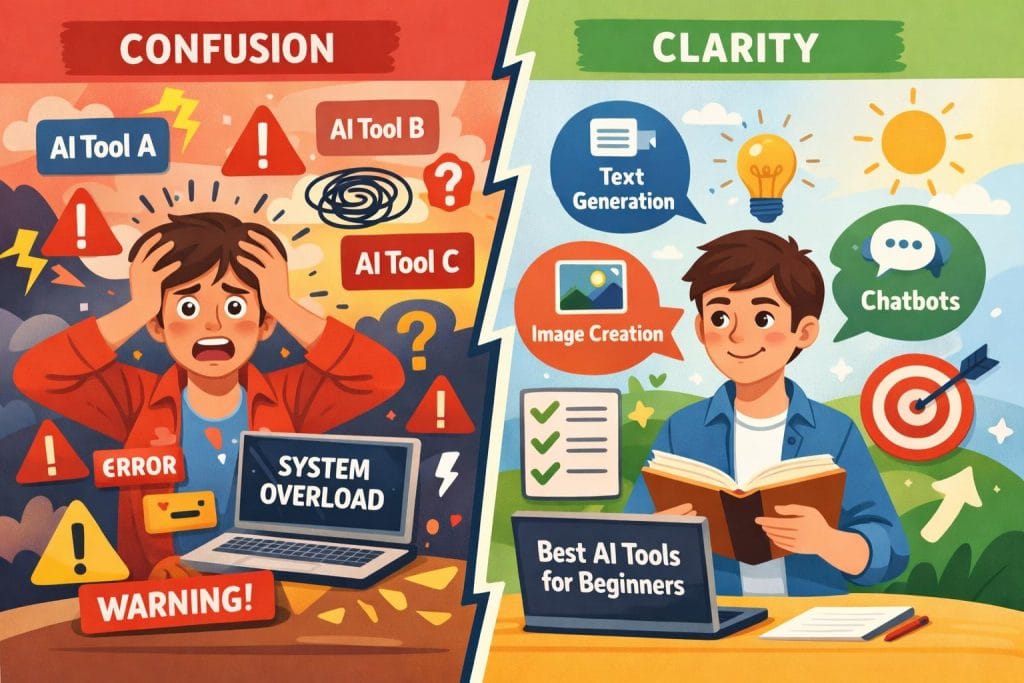
Mistakes are normal, but understanding them early helps avoid problems.
Relying on AI Without Understanding the Task
Using AI without knowing the goal leads to shallow learning.
Publishing Unreviewed AI-Generated Content
Unreviewed content often sounds unnatural and reduces trust.
Using Too Many Tools at Once
Too many tools create confusion. Focus on one or two first.
Expecting Instant Online Income
AI does not create income alone. Skills and consistency matter most.
Benefits of Using AI Responsibly for Online Work
Responsible AI use offers long-term benefits.
Saving Time While Maintaining Quality
AI saves time on drafts while humans protect quality.
Improving Structure and Clarity
AI helps organize ideas and improve readability.
Supporting Creativity and Consistency
AI handles routine tasks so creativity can grow.
Building Sustainable Online Habits
Responsible use builds habits that support long-term success.
Limitations and Challenges of AI Tools
AI is helpful, but not perfect.
AI Still Depends on Human Judgment
Humans must check accuracy, tone, and intent.
Risks of Over-Automation
Too much automation reduces learning and originality.
Why Originality and Context Still Matter
AI lacks real experience. Human insight gives content value.
Real-Life Beginner Examples of Responsible AI Use
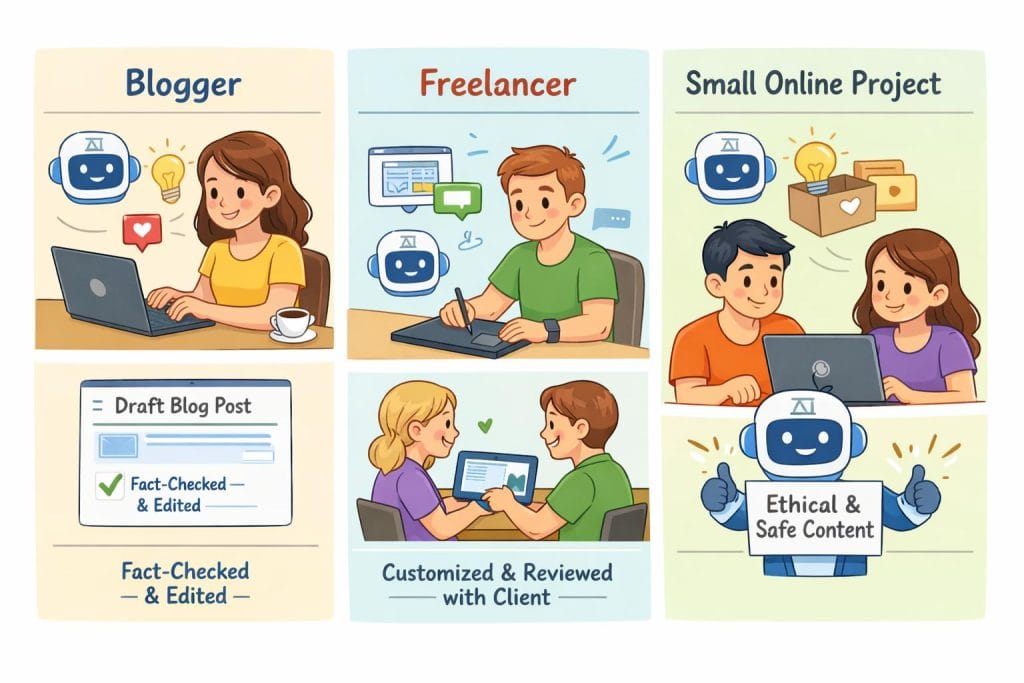
A Beginner Blogger Using AI for Outlines
The blogger uses AI for structure, then writes content personally.
A Freelancer Improving Clarity and Speed
AI helps refine drafts, but the freelancer controls tone and meaning.
A Small Online Project Staying Consistent
AI supports planning while humans manage publishing.
How AI Changed Online Work and Communication
Faster Collaboration and Content Creation
AI speeds up early stages while humans refine results.
Easier Communication Across Platforms
AI helps improve clarity in emails and messages.
How AI Fits into Modern Online Workflows
AI supports workflows without replacing responsibility.
Common Misconceptions About AI Tools
“AI does all the work for you”
AI only responds to instructions. Humans guide the work.
“Using AI means low-quality content”
Quality depends on how AI is used.
“Beginners should not use AI”
Beginners benefit most when AI is used responsibly.
Best Practices for Beginners Using AI Long-Term
Learning Skills Alongside AI Usage
AI should support learning, not replace it.
Keeping Human Effort at the Center
Humans plan, review, and decide.
Using AI to Grow, Not to Shortcut
Growth-focused use leads to sustainable success.
Frequently Asked Questions (FAQ)
Are AI tools safe for beginners?
Yes, when used responsibly and with review.
Can beginners earn online using AI responsibly?
Yes, but income comes from skills and consistency, not AI alone.
Do AI tools replace real skills?
No. They support skill development.
How much AI use is too much?
When AI replaces understanding, it becomes too much.
Conclusion – AI as a Support Tool, Not a Shortcut

Key Takeaways for Beginners
AI tools support online work, but learning and effort remain essential.
Why Responsibility Leads to Long-Term Success
Responsible use builds skills, trust, and consistency.
Connecting AI Usage Back to Technology and Online Business
AI is one part of the wider digital system.
For a broader foundation, see:
Technology and Online Business – The Complete Beginner’s Guide




4 Comments on “How Beginners Can Use AI Tools Responsibly for Online Work”