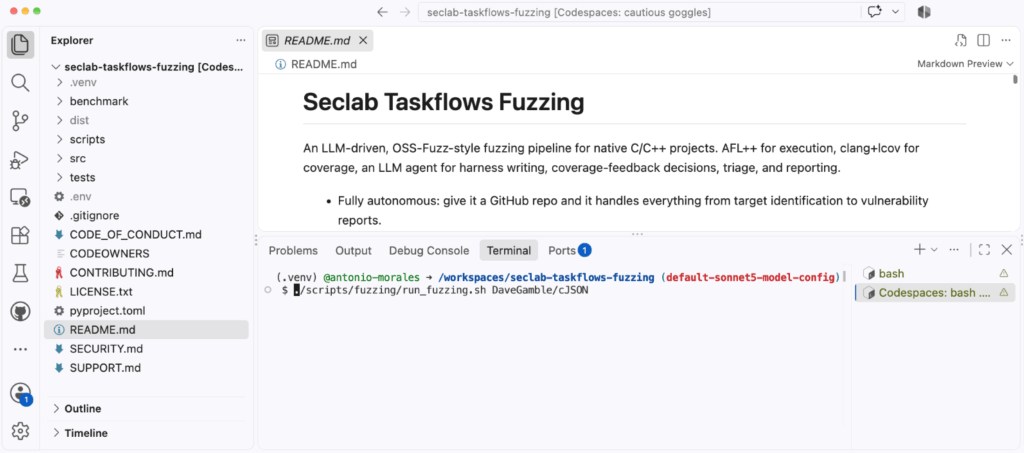
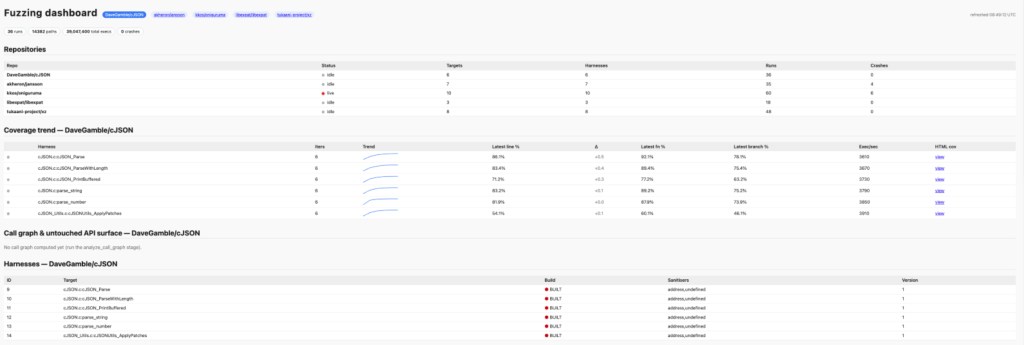
GitHub Security Lab published its AI-powered Fuzzing Taskflow on September 24. Built on the Taskflow Agent framework, the workflow can inspect a C or C++ repository, identify entry points, write a test harness, run AFL++, read coverage information, and triage crashes. The release addresses several labor-intensive steps that surround a fuzzing engine.
A fuzzer repeatedly exercises software with varied inputs. Before it becomes useful, someone must build the project, expose the relevant behavior, and connect inputs to the code under investigation. Automating that preparation can make security testing accessible to maintainers who cannot devote days to constructing the first harness.
Coverage must mean something
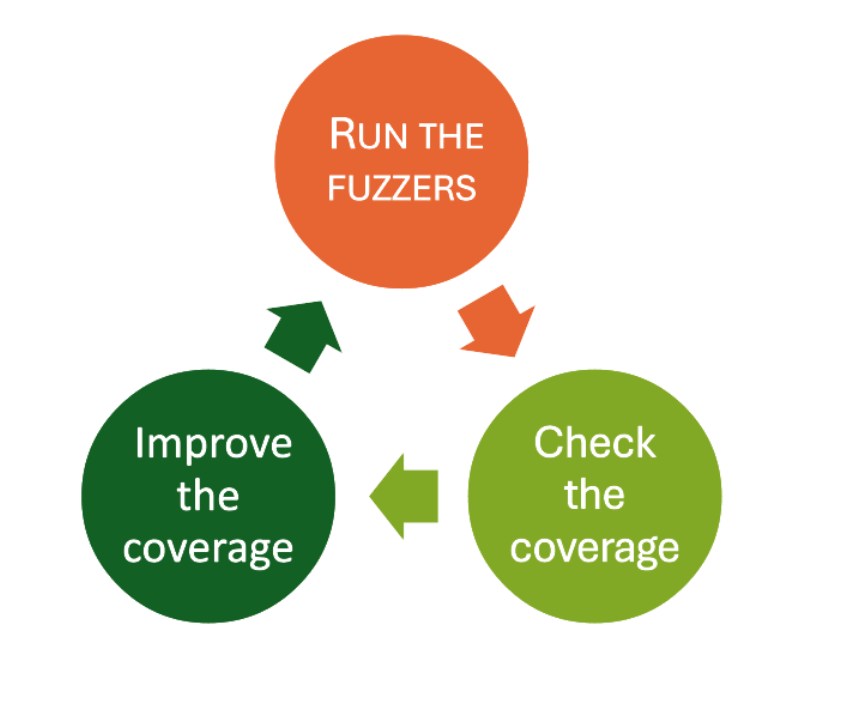
A harness can execute successfully while testing only an uninteresting wrapper. Review whether its inputs reach the parser, decoder, or other component that motivated the test. Coverage growth is useful evidence, but its relationship to the intended attack surface still requires interpretation.
Start with a known valid input and a few intentionally malformed cases. Confirm that the harness accepts the valid example and reaches the expected error-handling paths for the others. This catches setup mistakes before a long fuzzing run consumes time without exploring useful behavior.
Retain the compiler options, dependencies, seed corpus, and exact code revision. Those records are necessary when a crash appears hours later. A result that cannot be reproduced in a clean environment is difficult for a maintainer to investigate, regardless of how convincingly an agent describes it.
Turn crashes into maintainable evidence
Different inputs can trigger the same underlying defect. Group related crashes before opening issues so a project is not overwhelmed by duplicate reports. Keep the smallest reliable reproducer and distinguish a confirmed memory-safety problem from a harness error, a deliberate assertion, or an exhausted resource.
Run the workflow in an isolated environment with bounded compute and storage. Fuzzing intentionally explores unexpected behavior, and generated build steps should not inherit access to unrelated secrets or production services. The agent’s role in preparing the workflow does not remove the need for that separation.
For maintainers, a sensible first use is one well-defined component with an owner who can review findings. Expand after the team understands the quality of the harnesses and the effort required to triage results. GitHub’s release can reduce the setup barrier, while reproducibility, coverage interpretation, and responsible handling determine whether the additional testing improves the software.
Have a correction or a useful perspective?
Get in touch with the publication.