Anthropic introduced Claude Fable 5.2 and Claude Mythos 5.2 on November 9, publishing results in software engineering and hardware design. The two use the same underlying model. Fable includes cybersecurity and biology safeguards. Organizations seeking Mythos access must apply through the company’s verification programs. [1, 5]
Coding results depend on the test conditions
In Anthropic’s FrontierCode 2.0 evaluation, Fable 5.2 scored 49.1% at Xhigh effort, compared with 32.4% for Fable 5.1. The benchmark assesses whether proposed changes would be accepted by maintainers of open-source repositories. These are Anthropic’s reported results under specified settings. These results do not measure how every development team will fare. [1]
The company still recommends Opus 5.5 as a starting point for most coding and knowledge work, with Fable aimed at more demanding, open-ended assignments. Teams evaluating the new model will need to compare its code against their own review requirements. [1]
Circuit boards reached physical prototypes
In a separate study with Diode Computers, Fable 5.2 designed a USB speakerphone, a home voice-assistant hub and a handheld virtual pet. It selected components, laid out circuit boards, modeled enclosures and wrote firmware. Diode’s human engineers manufactured and assembled the devices under the model’s guidance. The researchers reported that the prototypes worked without repairs to their circuitry,. [2]
The account describes several practical decisions. For the speakerphone, Claude reassigned chip pins so tracks beneath touch controls could remain on one layer. For the hub, Claude wrote a routing program when guiding the existing tool connection by connection became cumbersome. [2]
Anthropic says the prototypes continued working after weeks of use. Their longer-term durability and ability to pass commercial certification remain unknown. Human fabrication and testing were still part of the development process. [2]
A proof experiment exposed the coordination work
In another report, 1,000 agents used an early Fable 5.2 version to reproduce a formal proof of Fermat’s Last Theorem in 28.7 hours. They used Lean, whose checker verifies proof steps, and coordinated through Git and a shared database. The team received 60 target statements, definitions and 47 already-proved lemmas from an earlier formalization. [3]
The prepared mathematical inputs narrow what the result establishes. The agents formalized an existing proof, working in separate sandboxes without internet access and with monitoring around their actions. The report calls it a toy experiment and says domain-specific infrastructure can still improve efficiency. [3]
Coordination also changed during the run. Agents initially judged many milestones too difficult, then reassigned work as easier pieces were completed. The shared task records and Lean’s proof checks gave the group a way to build on completed work. [3]
Check benchmark versions before comparing models
BenchCAD 2.1, used in the hardware evaluation, has its own comparison rules. Its maintainers warn that scores cannot be compared directly with version 2.0 or the 2.1 beta. The standard evaluation limits each case to 60 rounds and 500,000 output tokens, including thinking, and an episode without a submitted answer scores zero. [4]
Readers comparing another model’s CAD score should check the benchmark version, submission rules and run conditions. BenchCAD reports customized agent setups separately from standard runs. Readers need to read the two results within their respective limits. [4]
Sources
[1] Anthropic announcement of Claude Fable 5.2 and Mythos 5.2
[2] Anthropic study of real-world electronics design
[3] Anthropic report on the Fable 5.2 proof experiment
[4] BenchCAD 2.1 release and evaluation rules
[5] Official Claude launch post and publication time
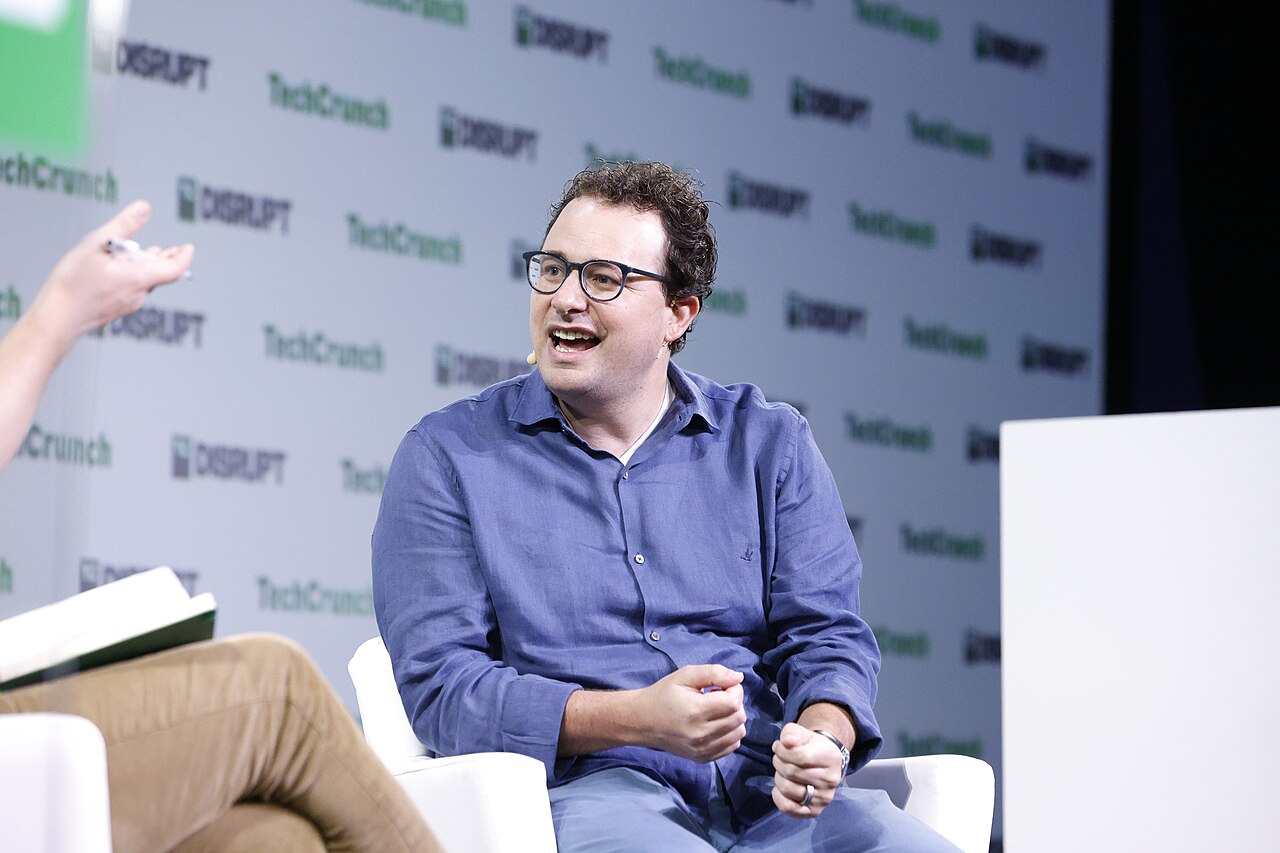
Dario Amodei at TechCrunch Disrupt in September 2023. File photograph. Photo: TechCrunch, via Wikimedia Commons. CC BY 2.0. Resized to 1280 pixels by Wikimedia; no further edits. Image source. Image license / permission.
Have a correction or a useful perspective?
Get in touch with the publication.