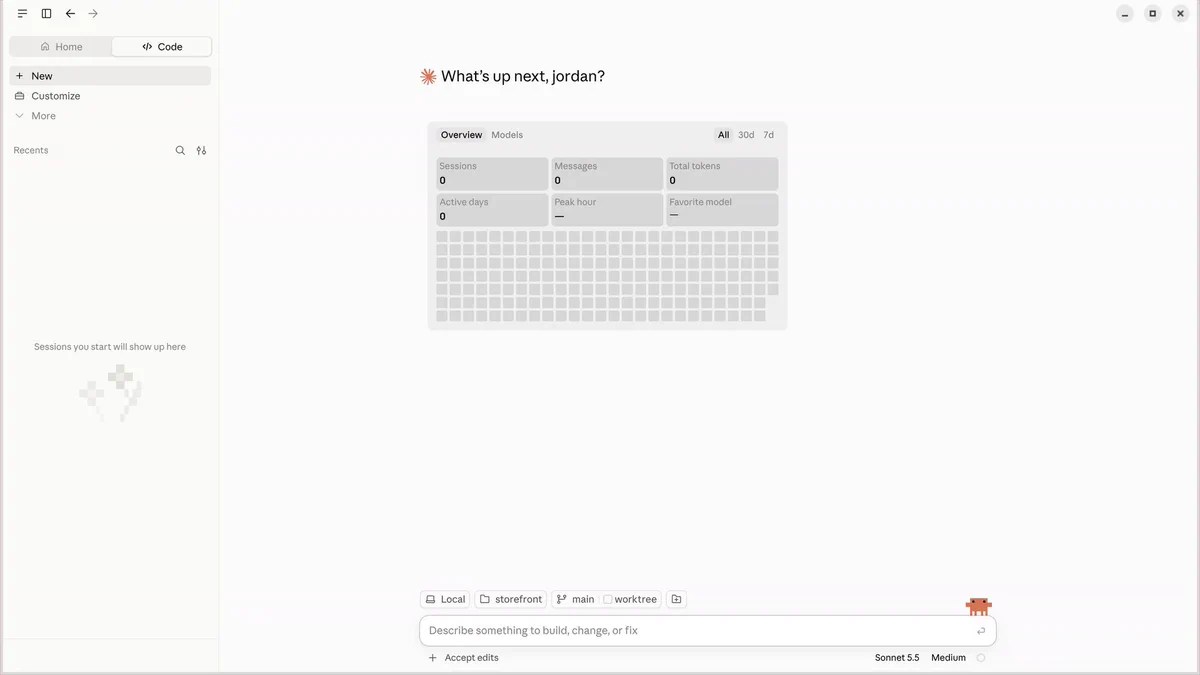
Claude’s developer team announced mods for Claude Code on October 1. The feature lets developers customize behavior, change the interface, or substitute features using TypeScript. Mods are distributed inside plugins and can be installed through the plugin workflow in the command-line or desktop application.
This creates a new layer between the agent product and a team’s daily process. A small extension could surface relevant context, present a clearer view of a task, or adapt an interaction to local conventions. The same flexibility also means the experience may differ substantially between two installations of the same coding tool.
Start with one observable problem
A useful first mod should solve something specific: information that is repeatedly missed, a status display that causes confusion, or a recurring manual step. Write down the expected improvement before implementing it. That makes it easier to decide whether the extension deserves to remain installed.
Keep presentation changes separate from changes that affect the model’s instructions or actions. A different status indicator can be evaluated through usability. A changed prompt or substituted operation can alter the agent’s output and needs a behavioral comparison. Mixing the two makes unexpected results harder to trace.
Record which extensions were active during a session. When an agent produces a surprising result, developers need to distinguish the base model, the surrounding tool, and local customizations. An undocumented mod can otherwise turn a reproducible issue into a mystery that appears only on one person’s machine.
Maintain an escape hatch
Every extension should have a straightforward disable path and a known working baseline. Test the application without the mod when investigating a regression. If removing it requires a complicated cleanup, a small convenience can become a persistent support burden.
Review updates as code changes. Check dependencies, requested capabilities, and the information the extension can access. A mod generated by an assistant still needs the same ownership and review as one written directly by a developer.
For team distribution, keep a small approved set and document the reason for each inclusion. More extensions do not automatically produce a better workflow. Two components that both rewrite instructions or intercept the same event can interact in ways neither author anticipated.
Mods make Claude Code more adaptable to particular teams. Their strongest use is a modest, inspectable improvement with a clear owner and a reversible installation. Treating customization as maintained software preserves the benefit without losing the ability to understand the agent’s behavior.
Have a correction or a useful perspective?
Get in touch with the publication.