Google has launched the Gemini Decisions API, an endpoint for choosing among predefined options inside AI applications. It uses Gemini Decision 1 to return probabilities for decisions such as selecting a tool or routing a request to a model. The announcement appeared on November 11 at 18:00 UTC, or November 12 in Beijing. [1]
A support agent might first decide which queue should receive a message, then draft a reply. A choice returned in a form that application code can read directly could simplify the first step. Developers still define the available options and decide what each result is allowed to trigger.
Three ways to ask a question
The documentation describes three question types: a yes-or-no test, a selection from a fixed list, and a score against an ordered rubric. Responses include confidence information. Choice questions return probabilities for the available options, while rubric questions return a weighted score across the defined levels. A score can therefore fall between two levels. [2]
Questions in one request share the same input but are evaluated independently. One answer does not become evidence for the next question. If a second decision depends on the first, the application needs to handle that dependency. Google also warns that a choice question will allocate probability among its options even when none is suitable. A defined fallback can therefore matter as much as the preferred answer. [2]
The price of repeated checks
Google lists paid input processing at $0.10 per million tokens for text, images, audio, video and PDFs. Shared input is billed once per request, even when several questions examine it. Each question adds its own instructions, criteria and formatting to the input count. The model generates zero output tokens. A free tier is listed, while the Batch API and context caching are unsupported for this model. [3]
The launch announcement specifies up to 1,000 questions and a 256K-token input context. Google reports end-to-end latency of 150 to 250 milliseconds, with its latency discussion covering inputs of up to 16K tokens. Those measurements apply to Google’s test conditions; request size and network conditions need checking in an actual deployment. [1]
At the listed rate, one million requests using 1,000 billable input tokens apiece would cost $100 in model input charges. The example covers only that input charge. Longer documents and question instructions change the token total, and an application may also pay for other services. [3]
Where human review still fits
Google advises setting confidence thresholds with labeled examples from the application's own traffic. An evaluation should include ambiguous requests and messages that belong to none of the available categories. A high score cannot repair an incomplete list of choices. Teams should compare misrouted cases and the number sent for review, as well as latency. [2]
For an agent that can issue refunds or change an account, choosing an action and authorizing that action are separate decisions. A routing score should not by itself grant permission to spend money or modify customer data. Keeping those permissions in application code makes it possible to test the new endpoint on a limited task before expanding what the agent can do.
Google says its internal uses include model routing in Gemini Notebook and selecting responses in CC. For outside developers, a useful first test is a repeatable decision with a known set of acceptable outcomes, where errors and review rates can be compared with the current process. [1]
Sources
[1] Google announcement of Gemini Decisions API
[2] Google Decisions API documentation
[3] Google Gemini Developer API pricing
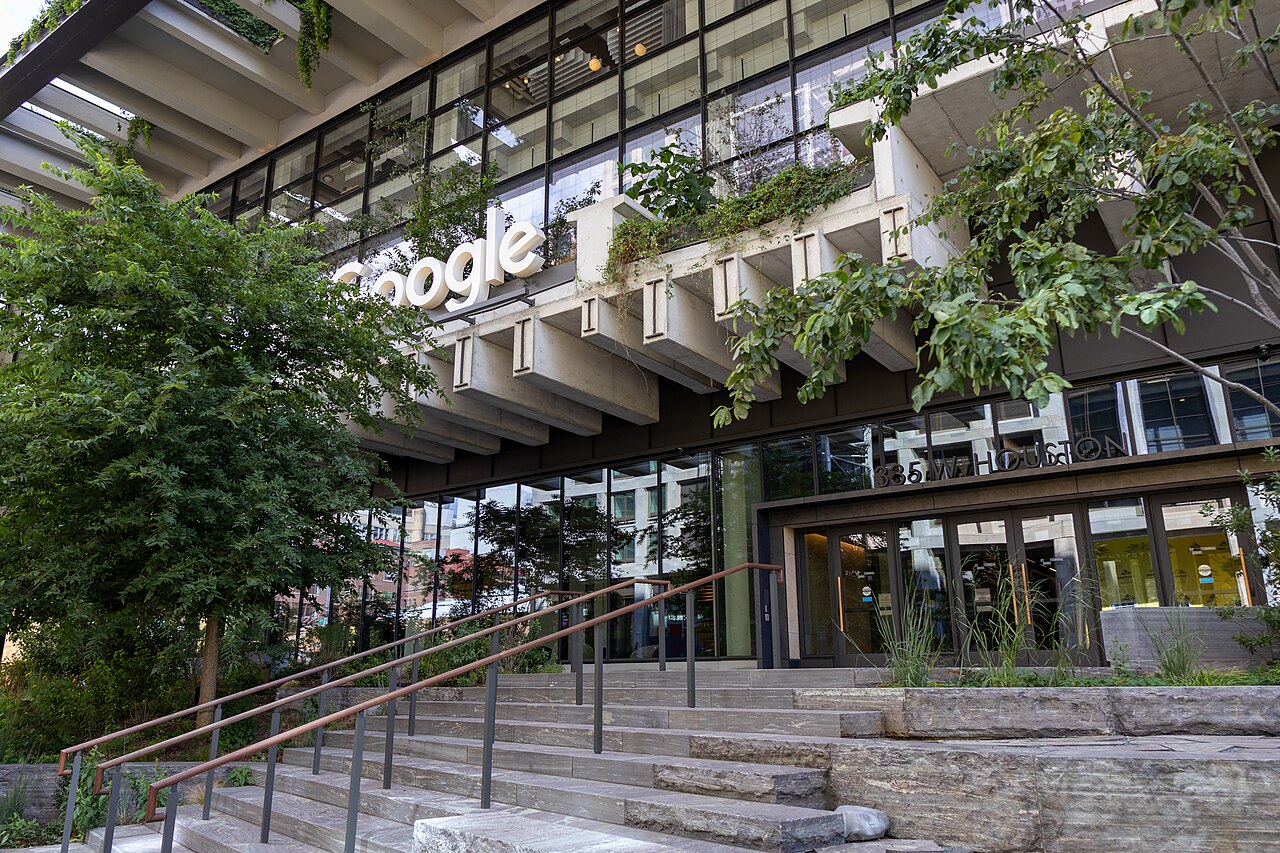
Google's St. John's Terminal office in New York, photographed in September 2025. File photo. Photo: Nielsoncaetanosalmeron / Wikimedia Commons, CC BY 4.0. Wikimedia 1280-pixel version; no crop or content changes. Image source. Image license / permission.
Have a correction or a useful perspective?
Get in touch with the publication.