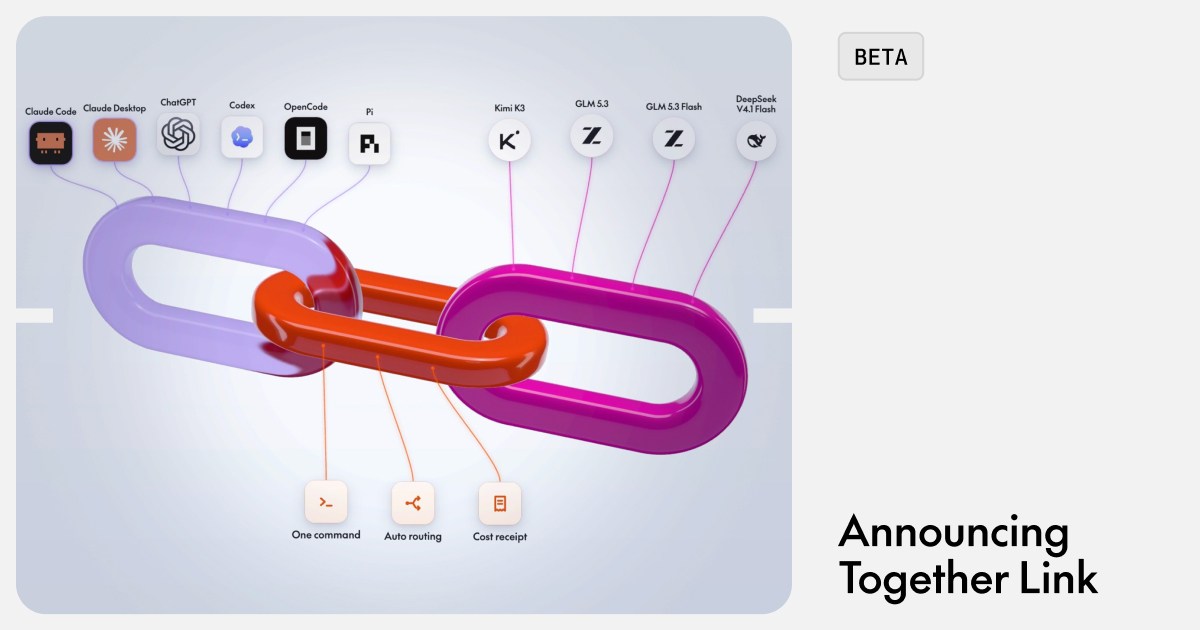
Together AI introduced Together Link on October 5, connecting existing coding-agent tools to models hosted on its platform. The announcement described support for established development workflows, session-level automatic routing, and a cost tracker comparing actual spending with an estimated Opus 5.5 bill for the same session. Together claimed savings exceeding 50%.
The architectural change is a separation between the tool a developer uses and the model that performs the reasoning. That can make experimentation less disruptive. A team may compare models without asking everyone to adopt a completely different editor or task workflow.
A familiar interface can hide a changed boundary
Even when the application looks the same, a different provider may process repository content, prompts, or tool results. Record the actual route and review the organization’s requirements for that data. A familiar login screen does not establish that every request follows the previous path.
Check the behavior that matters to the application: tool calls, structured outputs, long context, and recovery from errors. Compatibility with a request format does not guarantee equivalent behavior on every task. Start with a controlled repository and preserve an easy route back to the previous configuration.
Together described Auto routing as a decision made from the first task once per session, preserving prompt-cache reuse. That design makes the initial request important. If a session evolves from a small fix into a difficult migration, the original classification may no longer describe the work well.
Read a savings estimate carefully
A counterfactual bill based on the same token trace is useful accounting information, but it is not a controlled experiment. Another model might use fewer tokens, take different steps, or produce a different result. Compare accepted tasks as well as the displayed estimate.
Run a small set of representative assignments on both configurations with the same starting files and acceptance rules. Include review time and unsuccessful attempts. Keep model choice fixed during a comparison unless routing itself is the feature being evaluated.
For broader deployment, record which model handled each session and why it was selected. Those records help explain regressions, unusual costs, and changes in output quality. They also make it possible to improve routing rules from actual experience.
Together Link makes model substitution more accessible inside established coding workflows. The potential benefit is flexibility with less interface disruption. Teams realize that benefit when provider boundaries remain visible and cost claims are checked against equivalent, successfully completed work.
Have a correction or a useful perspective?
Get in touch with the publication.