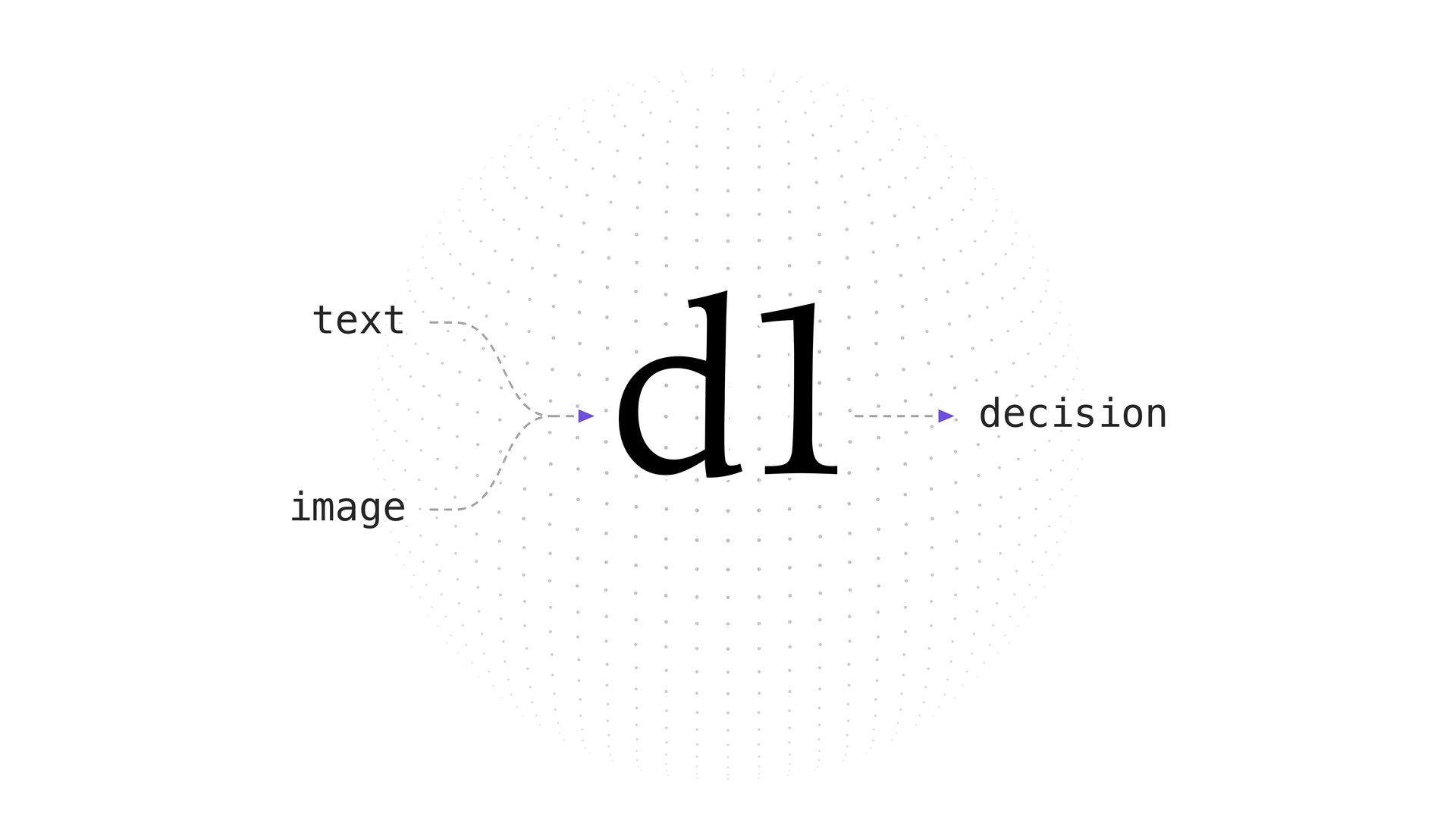
Liquid AI introduced d1 on October 5 as a decision model supporting text and images. Instead of generating a written answer token by token, it returns probabilities for defined outcomes in a forward pass. The announcement described three question types: a binary decision, a choice among labels, and a score on an ordered scale.
This targets a common mismatch in AI applications. A system may ask a language model for a paragraph, parse that paragraph, and ultimately use only one category. A model designed to return a structured decision can remove part of that conversion process.
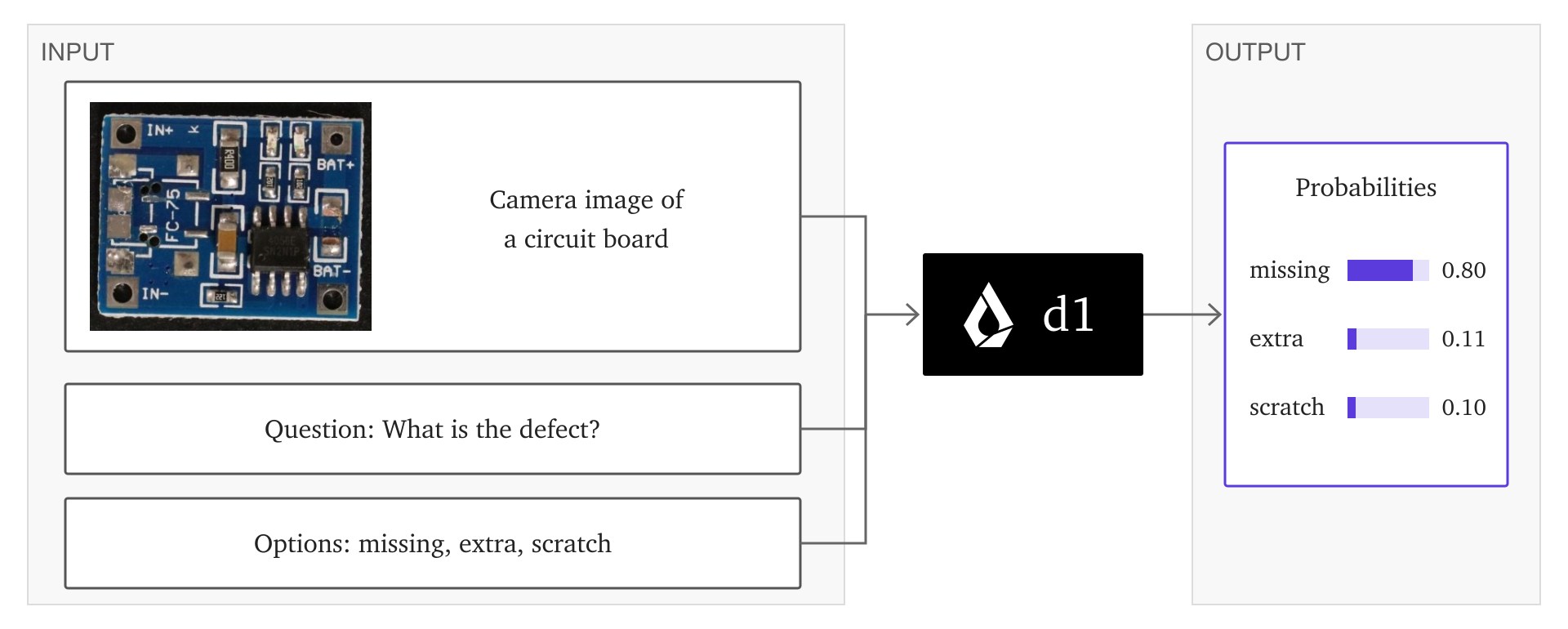
Define labels before measuring accuracy
For a support-routing example, make categories distinct enough that a person can apply them consistently. If “billing” and “account problem” overlap without a rule, disagreements may reflect the task definition rather than a model weakness. Include an explicit route for ambiguous or unsupported cases.
Build an evaluation set from the application’s actual inputs, including difficult examples and recent changes in terminology. Measure performance by category. A strong overall score can hide a weak result on a rare class that is expensive to mishandle.
Probabilities should be checked against observed outcomes. If cases assigned a high probability are often wrong, a threshold chosen from the number alone will be misleading. Calibrate the decision process on representative data and revisit it when the input distribution changes.
Make uncertainty operational
A useful application can automatically route clear cases and send uncertain ones to a person or a more capable process. The threshold should reflect the consequence of a mistake and the available review capacity. It is a product decision, not a universal number supplied by the model.
Image inputs add another layer of variability. Lighting, camera angle, compression, and background can affect a classification. For visual inspection, test the conditions of the actual capture setup and retain examples of failure. A successful demonstration on a public dataset does not establish performance on a different production line.
The announced billing model counted input tokens without generated output tokens, with each question billed as its own prompt. That makes it important to measure the complete request pattern, especially when asking several questions about the same image.
d1’s release is useful because it makes the output contract narrower and more explicit. A structured answer can simplify integration, while label design, calibration, and escalation determine whether the decision is dependable. The model’s job becomes clearer; the application still owns what happens next.
Have a correction or a useful perspective?
Get in touch with the publication.

