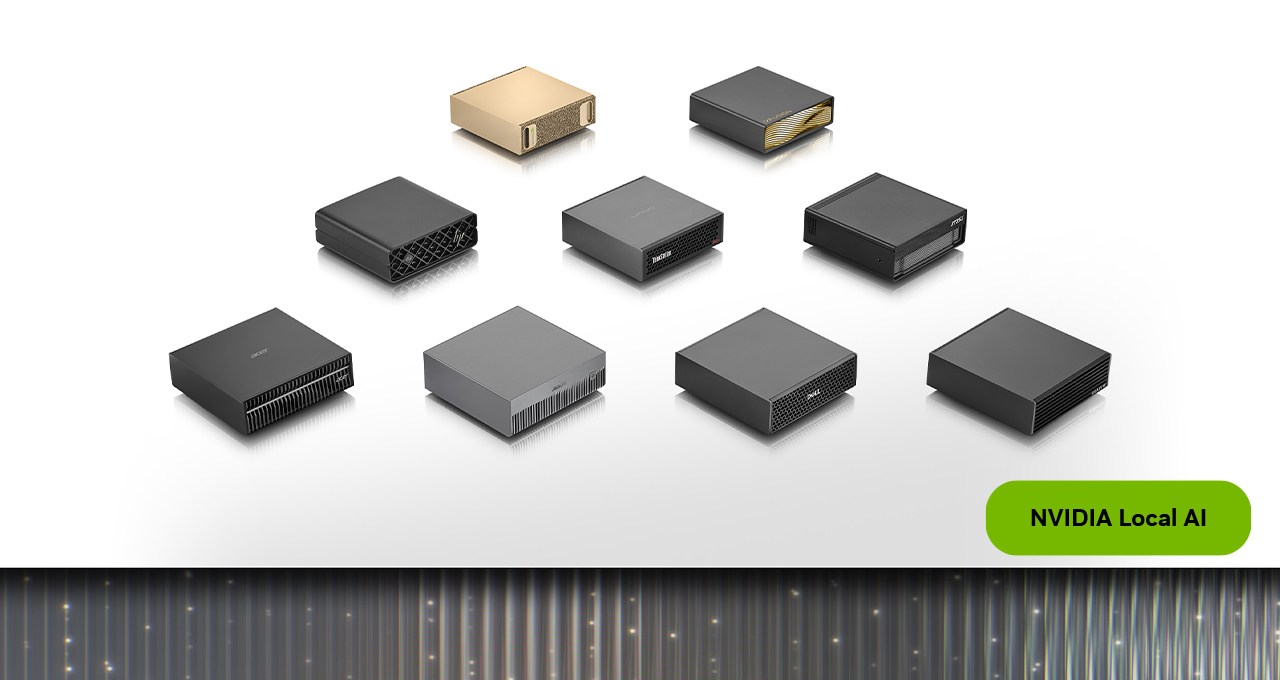
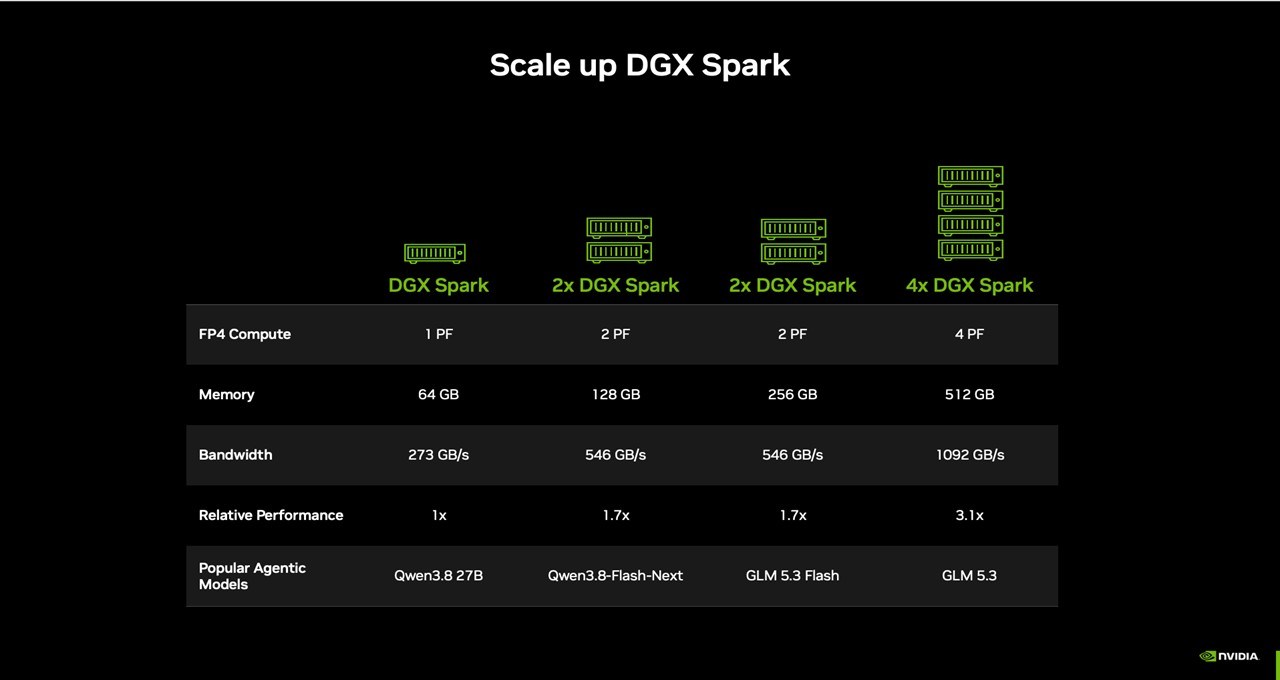
NVIDIA announced a 64GB unified-memory configuration of DGX Spark on October 2, with availability from manufacturing partners scheduled for October 23. The configuration retained the GB10 Grace Blackwell platform and NVIDIA software stack. The company also described connecting two systems through NVIDIA Sync Cluster Assistant for workloads needing more capacity.
The purchase question is primarily about the workload’s memory requirements. A model’s parameter count is a rough starting point, while precision, context length, runtime overhead, and concurrent sessions determine how much memory an actual application consumes.
Calculate beyond the weights
As a simple illustration, 30 billion parameters stored at four bits require roughly 15 billion bytes for the raw parameter values. That arithmetic excludes quantization metadata, runtime buffers, context caches, and other software. It is a lower-level estimate, not a promise that a particular model will run comfortably.
Build a representative workload before choosing hardware. Include the intended context length, output length, and number of simultaneous users. A single short prompt can fit while several long agent sessions exceed the practical capacity of the same machine.
Measure responsiveness as well as whether the model loads. A system may technically support a configuration that is too slow for interactive work. Conversely, a slower local job can be acceptable when it runs in the background and keeps sensitive data within the organization’s environment.
Clustering changes the system
Two machines can expand available resources, but the application must distribute work and move information between them. Performance depends on the model, runtime, communication pattern, and configuration. A vendor’s improvement on one named workload should not become a general speedup assumption for every model.
Account for networking, power, storage, updates, and the person responsible for operating the equipment. Local inference replaces some cloud spending with hardware and maintenance obligations. The comparison becomes useful when it includes expected utilization and the full period the system will be used.
A cautious buying process uses a small compatibility list: required model revisions, supported runtimes, expected memory use, and the tasks that must finish within a deadline. Ask for evidence on those workloads rather than relying on the largest advertised parameter count.
The 64GB announcement expands the available configurations for local AI development. Its suitability follows from a measured workload and an operating plan. Memory headroom and repeatable performance are more informative than a theoretical maximum model size when the machine is expected to do useful work every day.
Have a correction or a useful perspective?
Get in touch with the publication.