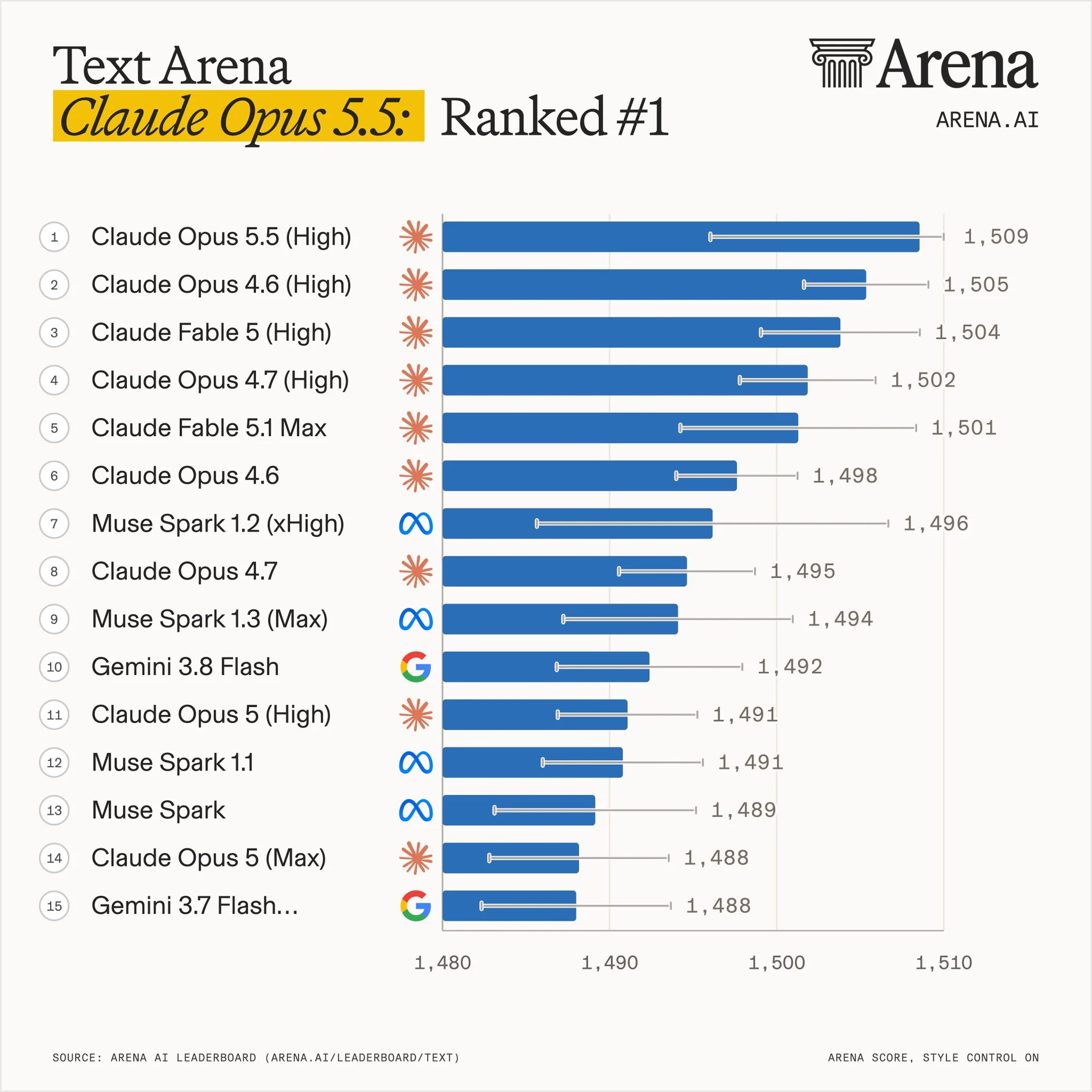
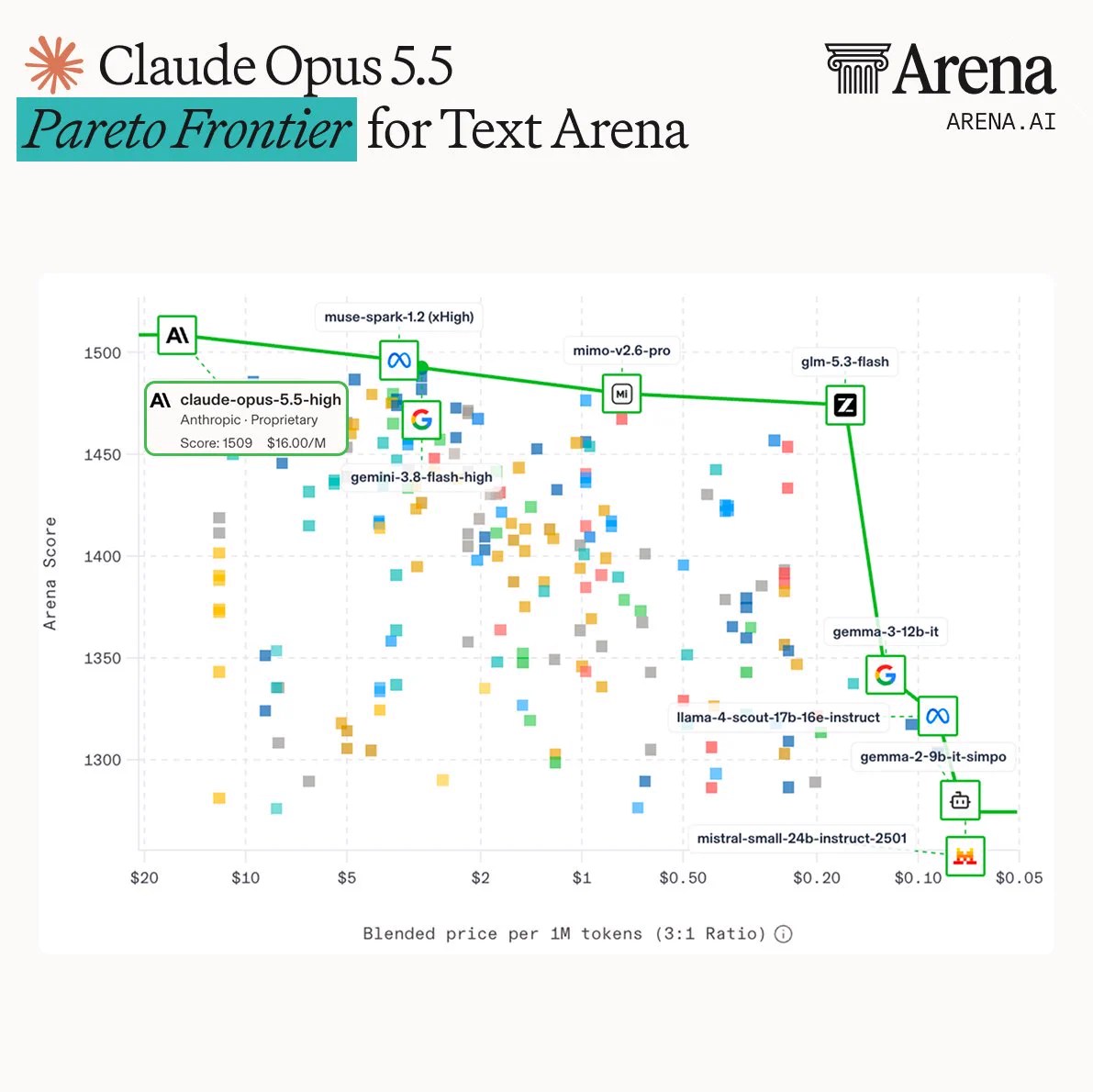
On September 26, Arena announced that Claude Opus 5.5 at High effort had debuted at the top of Text Arena with 1,509 points. It reported an 18-point improvement over Opus 5 at High effort and placed the new model on its price-performance frontier. The announcement captured a particular leaderboard state and model configuration.
A ranking like this helps answer a useful question: which responses people prefer in the evaluated comparisons. That can matter greatly for writing, explanation, and general assistance. It is a different question from whether an agent edits the correct database record or completes a software change without an unwanted side effect.
Read the label before the number
The effort setting belongs to the result. A model evaluated at High effort should not be treated as interchangeable with every other setting available under the same family name. The surrounding interface, instructions, and evaluation period also affect how a result should be interpreted.
Leaderboard positions can move as more comparisons arrive. A snapshot should remain dated when it is discussed later. Describing a model as the leader without that date can turn an accurate launch observation into a misleading current claim.
Small score differences also deserve restraint. Readers need the evaluation’s uncertainty and comparison methods before treating a narrow gap as a decisive advantage. A numerical ordering is easy to display, while the strength of the evidence behind adjacent positions can be less obvious.
Turn preference into a product test
For a writing assistant, create a set of representative assignments and compare outputs without showing model names. Ask reviewers to assess clarity, factual support, usefulness, and adherence to the brief separately. A response can be pleasant to read while still omitting a crucial limitation.
For a transactional assistant, add checks beyond preference. Confirm the requested state change, inspect unintended changes, and measure how much intervention was needed. A polished explanation of an unsuccessful action should not count as a successful transaction.
The cost frontier is similarly dependent on the task mix. A blended token price is useful for a standardized comparison, but a real application may consume a different ratio of input, cached context, and output. Recalculate costs using actual usage before making a procurement decision.
Opus 5.5’s debut provides a strong reason to include it in an evaluation set. The most useful next step is to match the leaderboard’s evidence to the product’s objective, then measure the parts of that objective the leaderboard does not cover.
Have a correction or a useful perspective?
Get in touch with the publication.

