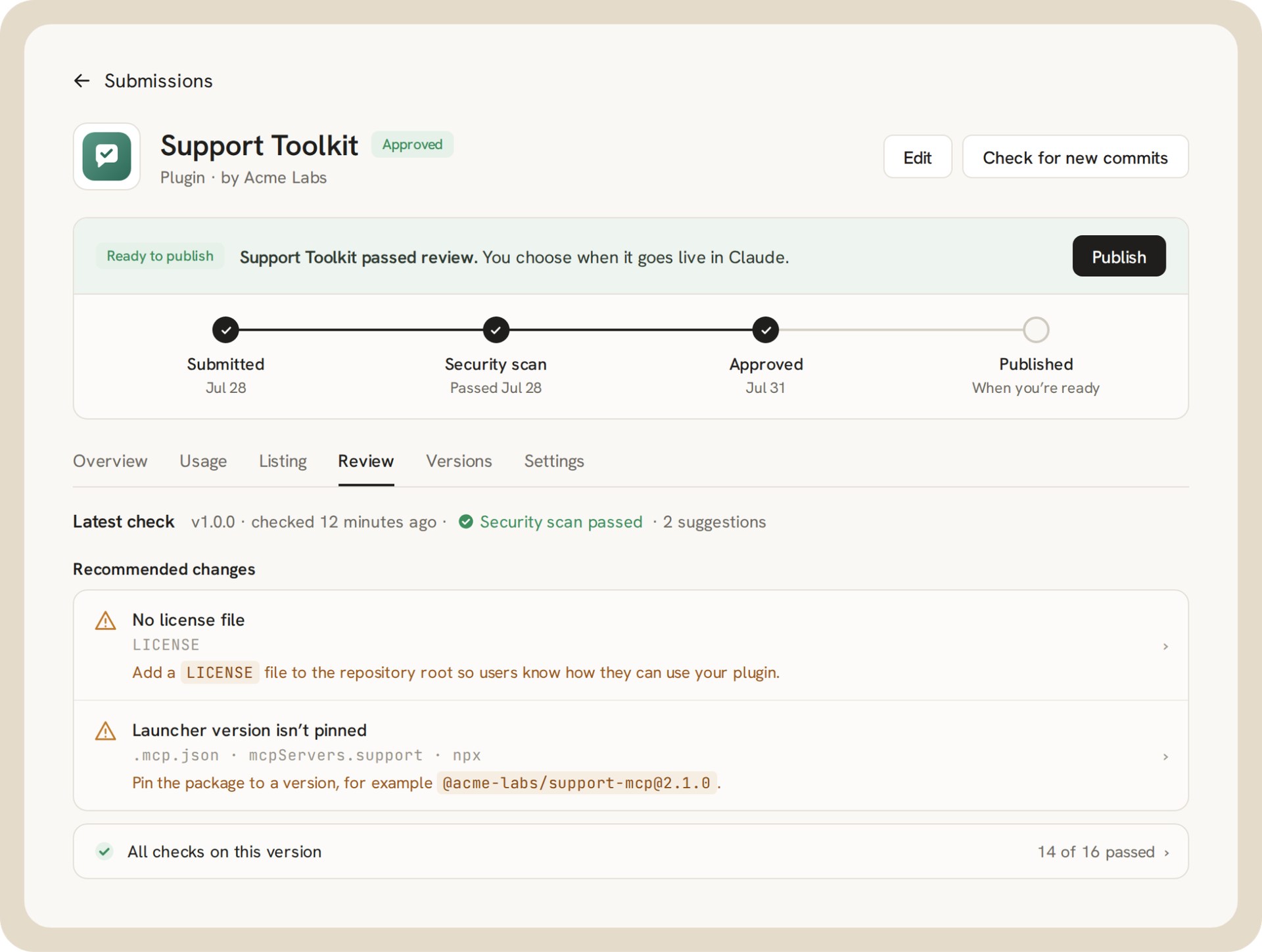
Anthropic announced a developer submission portal for Claude plugins on September 25. Plugins can package MCP connectors, Agent Skills, or both. The portal supports validation, review feedback, publication after approval, and usage analytics. The announcement also described bundles that can include additional Claude Code components such as commands, hooks, and agents.
This is a distribution development as much as a technical one. A connector can expose a useful capability, while a skill can explain how to use it in a particular workflow. Packaging them together gives developers a way to deliver an experience that users can discover and install as one unit.
Define the promise before the package
A useful listing should explain the task it supports and the information it needs. An expense plugin, for example, should distinguish reading receipts, drafting a report, and submitting that report. Those are separate user expectations even if they are implemented through the same remote service.
Version the instructions alongside the connector behavior. If a tool changes a required field while an old skill still describes the previous input, the user can experience a failure that neither component shows in isolation. Test the installed bundle as a whole before publishing an update.
- Keep a short compatibility record identifying supported tools and authentication requirements.
- Explain how users can disconnect the service and what happens to stored information.
- Provide a support route for failed actions, not only installation problems.
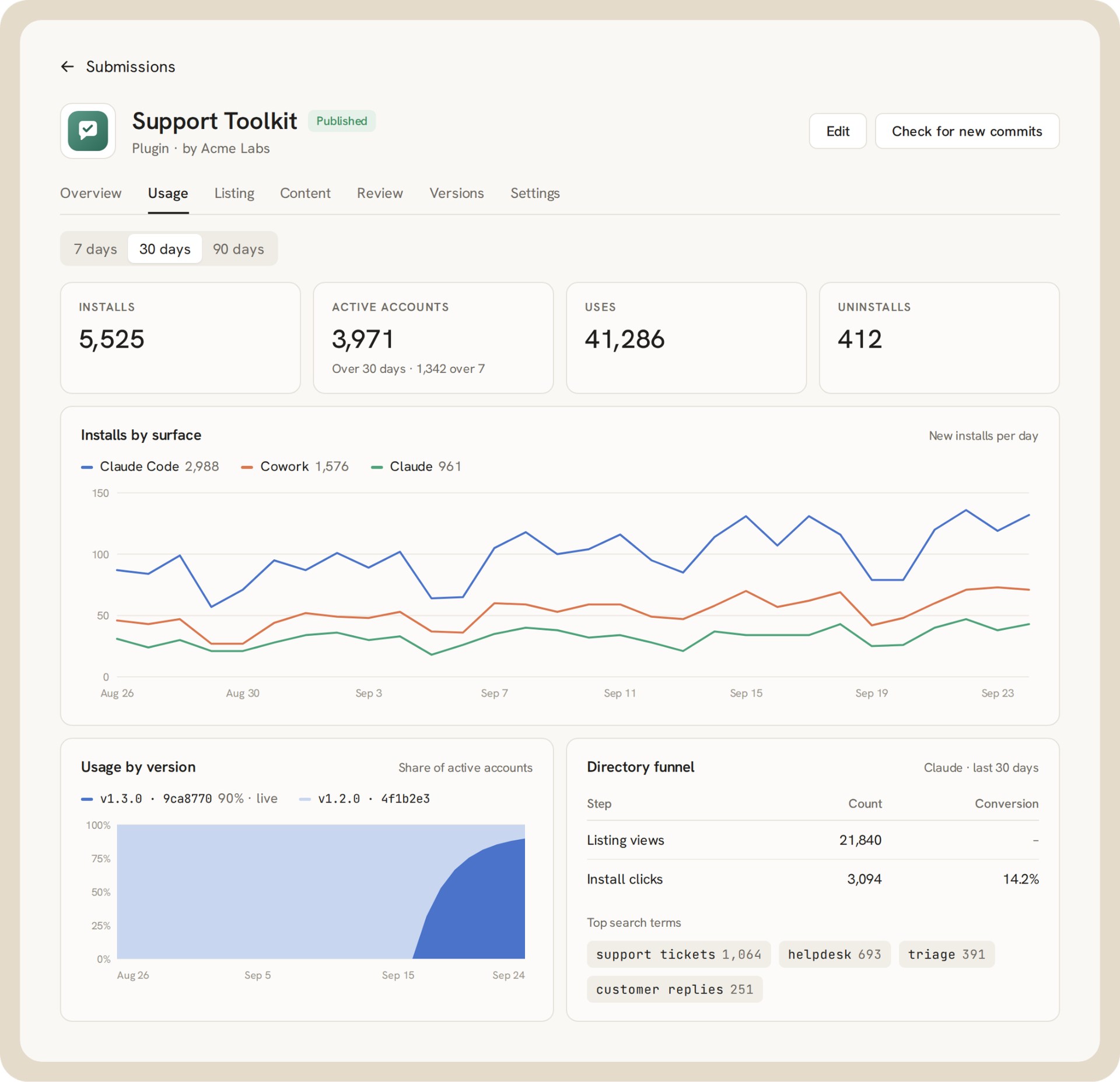
Use analytics to find friction
Installation counts show interest, but they do not show whether a person completed the intended task. Combine product analytics with a small set of observable outcomes: a successful connection, a valid first result, and a completed workflow. Collect only the information necessary to understand those events.
Review feedback should become a maintenance checklist. A plugin that passed an initial review can still develop problems when its upstream API, permissions, or dependencies change. Assign an owner who can publish fixes and communicate a temporary limitation when the integration is unavailable.
The portal reduces the distance between a working extension and an audience. It also makes the ongoing product obligation more visible. Developers who treat instructions, permissions, compatibility, and support as part of the release will be better placed to turn discovery into repeat use. The package is the entry point; dependable behavior across updates is the reason users keep it installed.
Have a correction or a useful perspective?
Get in touch with the publication.