Cursor introduced Rollouts and Security Reviewer on September 23, positioning the two bots around getting reliable, secure changes into production. The announcement shifts attention beyond generating a patch. A change can be syntactically correct and pass a local test while still requiring deployment coordination and a review of how it affects the running service.
This is a consequential direction for coding tools. As producing code becomes easier, the queue can move downstream: more changes await review, more releases need observation, and more findings need someone to decide what to do next. Automating those stages can help only when their responsibilities remain clear.
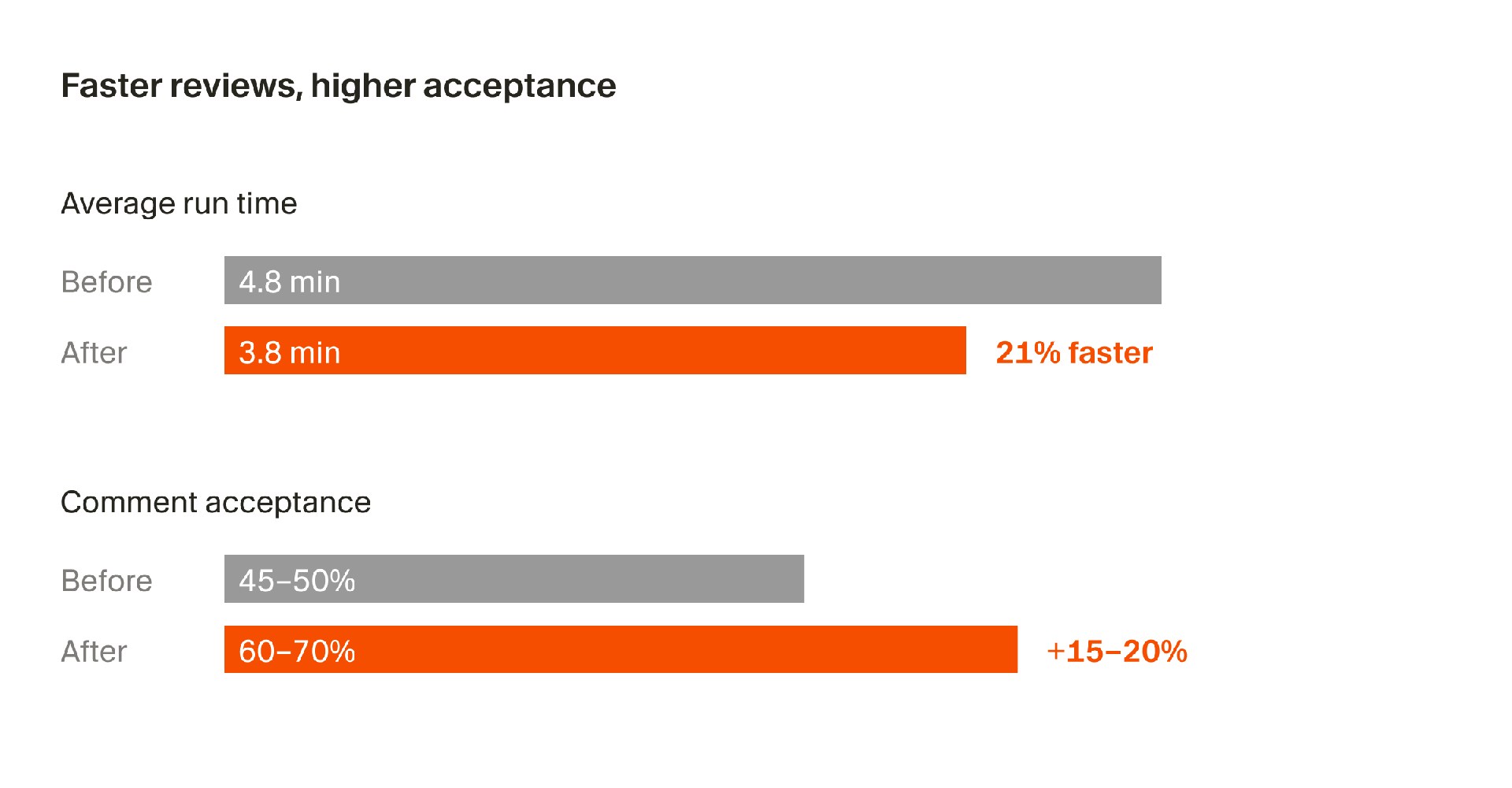
Connect each finding to a decision
A security review should identify the affected code, explain the relevant behavior, and describe the conditions under which the concern matters. A generic warning about an entire repository is difficult to act on. A reviewer needs enough detail to reproduce the issue or explain why it does not apply.
Separate findings that block a release from suggestions that can become follow-up work. That distinction should reflect the project’s own policies and risk tolerance. If every generated comment has the same urgency, developers will spend time rediscovering priorities and may begin ignoring the review altogether.
Track dismissed findings as well as accepted ones. Repeated false positives around a particular pattern can reveal a missing explanation or a poorly configured rule. Feedback becomes more useful when it changes the next review instead of remaining an isolated conversation.
A rollout needs an observable outcome
Before deployment, define what success will look like in the service: an error rate, a latency range, a business operation that still works, or another relevant signal. Record the baseline and the owner who can stop or reverse the rollout. An agent’s completion message should point to those observations.
For a small service, the workflow may be as simple as deploying to a limited environment, running a focused check, and waiting for a named reviewer. Larger systems can require staged exposure and several independent signals. The level of automation should follow the available evidence.
Cursor’s announcement makes the final stages of software delivery a more visible part of the agent product. Teams evaluating that direction should ask whether the bots reduce unresolved decisions and produce useful records. More automated activity is valuable when it leads to clearer releases, faster investigation, and less uncertainty about what actually changed.
Have a correction or a useful perspective?
Get in touch with the publication.