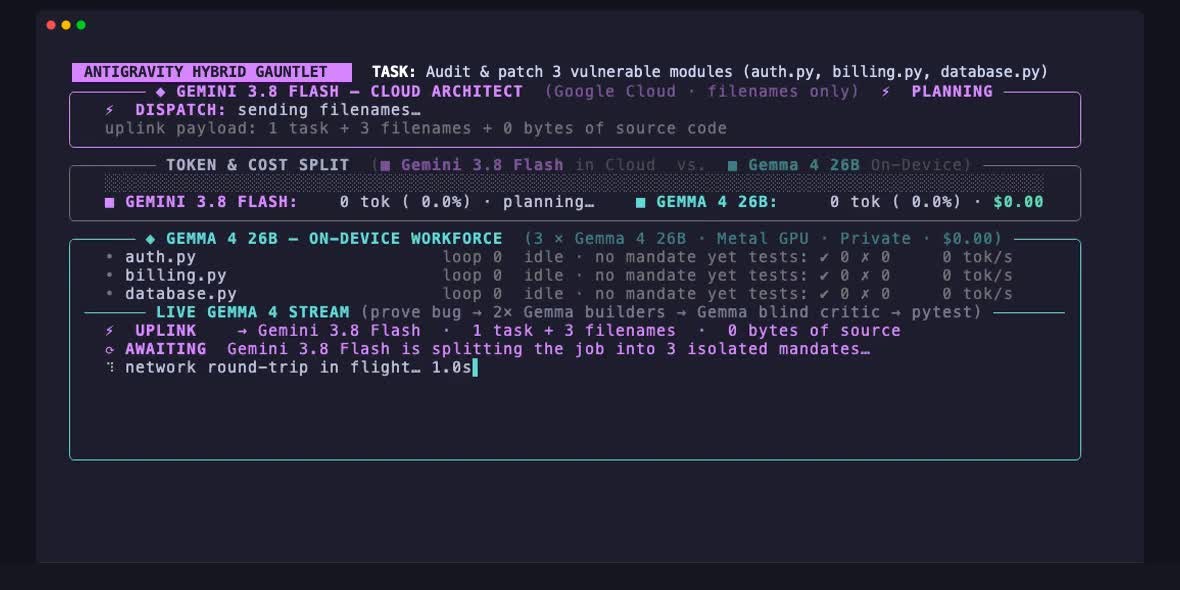
Google announced local model support in the Antigravity SDK on September 23, initially pairing LiteRT with Gemma 4 26B A4B. The company described fully offline agent assistance and recommended more than 24GB of video memory or unified memory for the demonstrated setup. It also showed a hybrid pattern in which a cloud model planned work and local models handled code.
The important distinction is between where inference runs and where information travels. A local model can keep prompts on the device, but an agent may still invoke network tools, retrieve packages, or send a task summary to a cloud planner. The privacy properties belong to the whole workflow.
Draw the boundary before choosing the model
List the information each component receives. Source code, filenames, issue descriptions, error messages, and generated summaries can all contain confidential details. Decide which of those may leave the machine, then configure the orchestration around that decision.
For example, a local worker might inspect a private repository while a remote planner receives only a generic task category. That can reduce disclosure, but it also limits the planner’s information. If the planner cannot understand a failure without seeing sensitive output, the workflow needs a deliberate escalation path instead of silently widening the data boundary.
Test the offline claim under the conditions the application actually needs. Download required artifacts in advance, disconnect the network, and run the intended task. Record which steps still need external services. A successful model response is not enough if a later build or dependency lookup blocks the job.
Local capacity needs a budget too
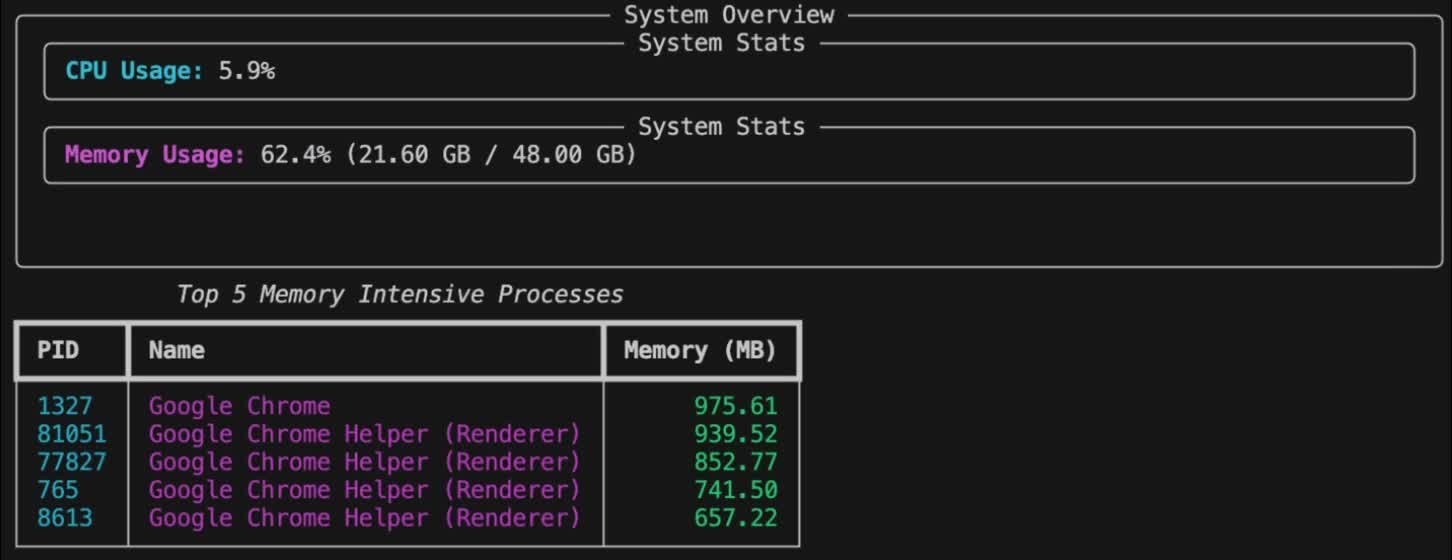
Device execution avoids a per-request cloud bill, but it consumes memory, battery, compute time, and developer attention. Several local agents can compete with an editor, browser, and test runner. Measure responsiveness while the normal development environment is open, not only on an otherwise idle machine.
Use bounded jobs before attempting long parallel sessions. A useful local worker has a defined input, a verifiable output, and a stop condition. It should return its findings even when it cannot finish, so a human or another component can continue without repeating the entire investigation.
The SDK update gives developers another place to execute agent work. The stronger architectural benefit is the ability to assign work according to data sensitivity and available hardware. That benefit appears when routing decisions, network behavior, and resource limits are explicit.
Have a correction or a useful perspective?
Get in touch with the publication.