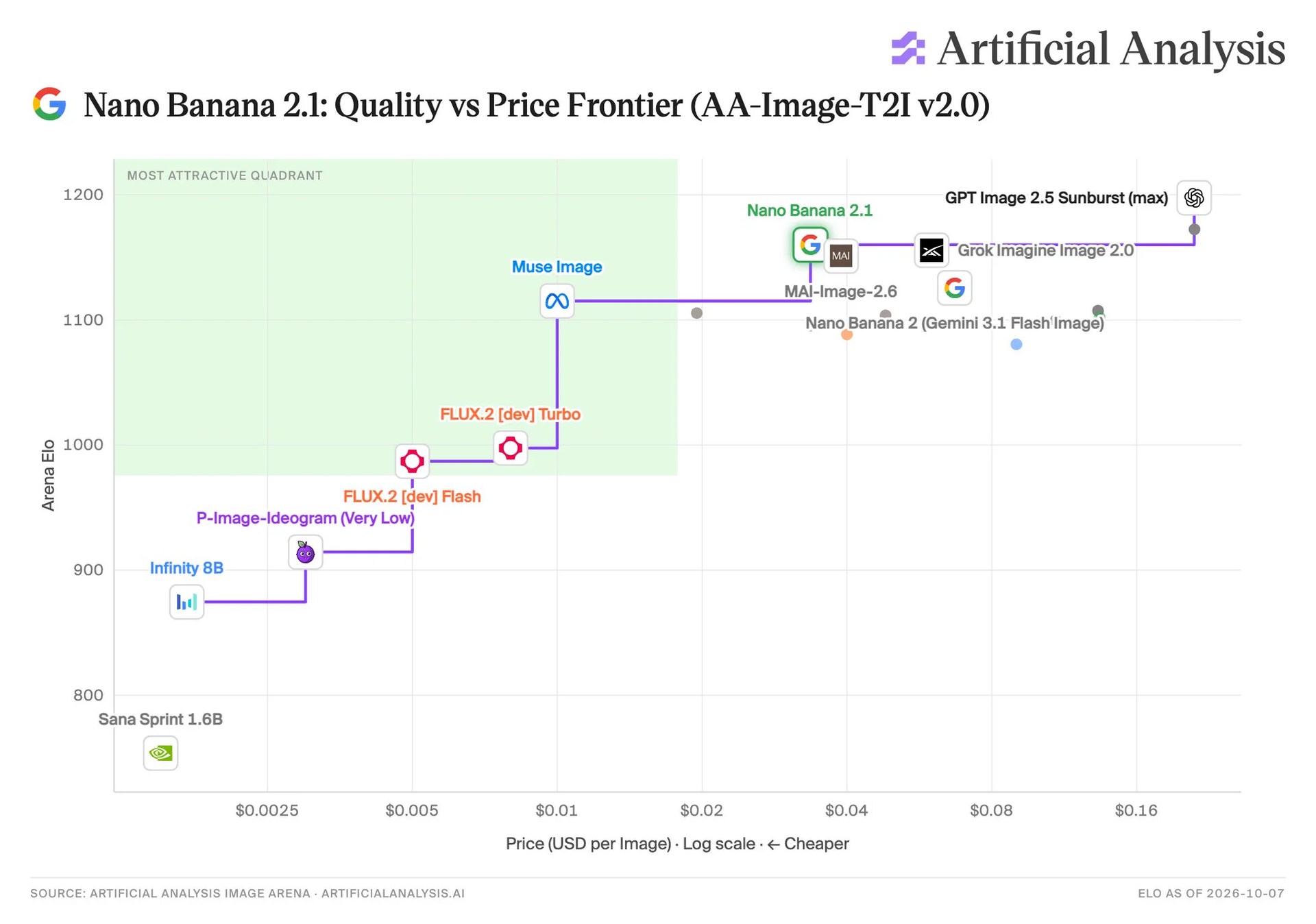
Google’s October 6 release of Gemini Nano Banana 2.1 targets a practical problem in image generation: producing the right composition for the place an image will actually appear. Google describes improvements to text rendering, instruction following, character consistency across edits, and unusually wide or tall formats. The model supports ratios including 4:1 and 8:1, alongside their vertical counterparts, across several resolutions.
Those are vendor claims, rather than results from our own image tests. Their significance is nevertheless clear. A panoramic website banner, a narrow mobile placement, and a square social image are different design problems. Stretching or cropping one attractive picture into all three often removes the very subject that made the original useful.
Composition becomes part of the brief
A creative team evaluating the update could start with one fictional campaign and three intended placements. Write a separate composition brief for each: where the subject sits, where a headline must remain readable, and which details must survive a small preview. Keep the visual identity constant while allowing the arrangement to change. This tests whether format control helps production rather than merely producing a wider canvas.
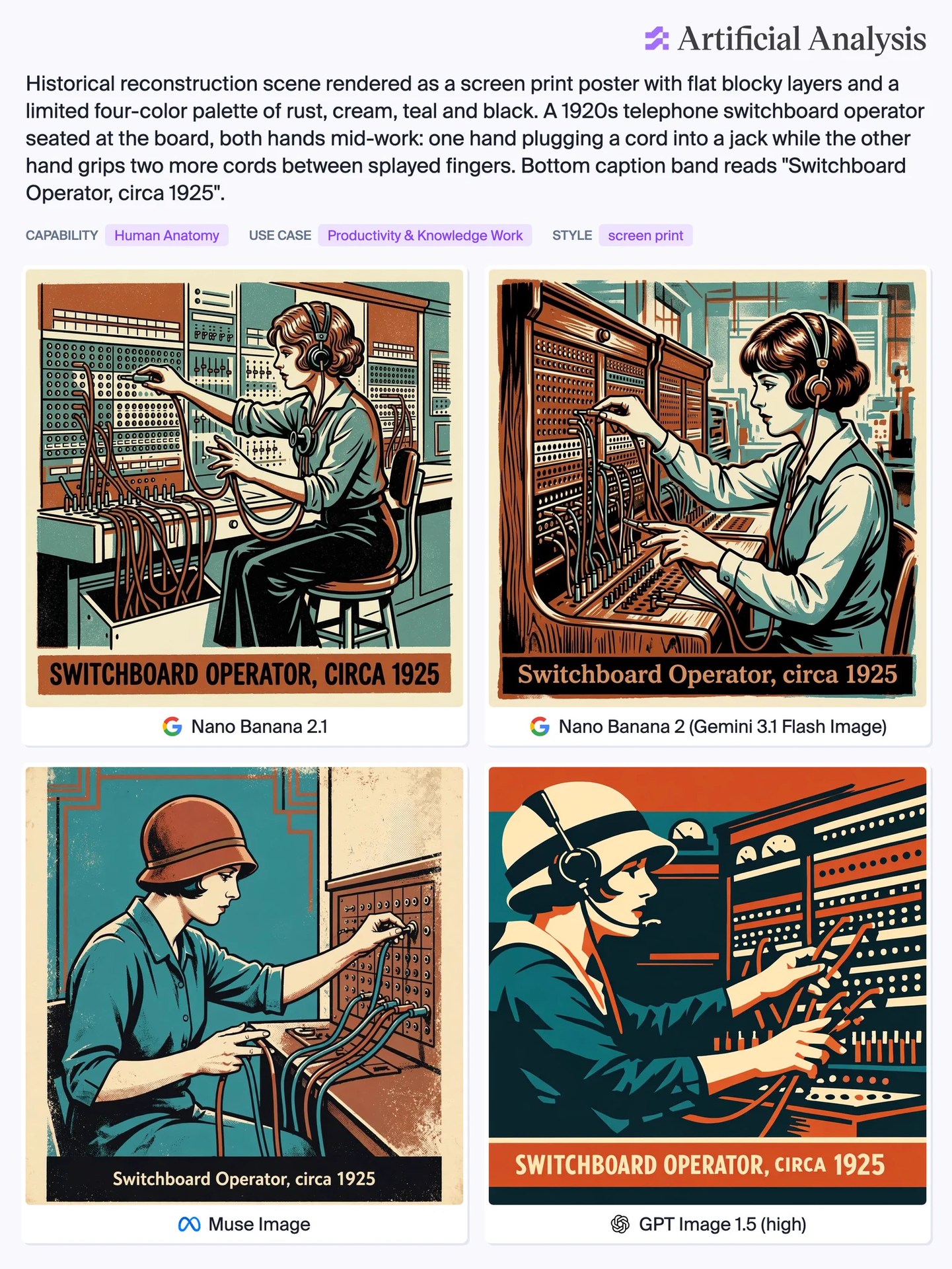
The distinction matters for text in images. A model may draw a slogan convincingly at full size while leaving it unreadable in a mobile card. Review the final asset at its real display size. For content that changes frequently, such as prices or dates, editable website text may remain more useful than text baked into pixels.
Measure the editing sequence
Conversational consistency deserves a sequence test. Generate a character or product scene, request a lighting change, then change the background and finally reposition the subject. Save each stage. The useful questions are whether identity drifts, whether earlier instructions disappear, and whether a small revision unexpectedly alters unrelated details.
Count the rejected variants and manual repairs as well as the accepted images. Suppose one model produces a satisfactory draft faster but requires several rounds of cleanup. Another may generate more slowly yet deliver a usable composition on the second attempt. A production comparison should include both paths, because the buyer is paying for an approved asset and the time needed to reach it.
The new formats are most interesting for teams with a recurring mismatch between generated images and their publishing templates. A small evaluation set of actual placement sizes, brand constraints, and revision requests will reveal more than a collection of unrelated showcase prompts. Keep the model version and prompts with each approved asset so later changes can be compared against a stable record.
Have a correction or a useful perspective?
Get in touch with the publication.

