
Why Online Business Models Matter More Than Ever
The internet has changed how people work, sell, and earn money. Today, anyone can start an online project with a phone or a laptop. Yet many beginners feel confused, overwhelmed, or disappointed after trying. The problem is rarely a lack of effort. It is usually a lack of direction.
Most beginners jump straight into tools and platforms. They create social media accounts, start a blog, or open a store without a clear plan. They hope the right app or strategy will lead to results. Over time, this leads to scattered actions and slow progress. When results do not appear, motivation fades.
The real reason many online attempts fail is simple. There is no clear business model behind the effort. An online business model is not a shortcut or a trick. It is a system. It explains how value is created, who it is for, and how income is generated in a consistent way.
You can learn more about why structure matters in our guide on Why Technology Is a Tool — Not a Shortcut to Online Business Success, where we explain how systems prevent scattered action.
When beginners understand this system, everything becomes clearer. Decisions make more sense. Time is used better. This guide helps beginners see online business models in a simple, practical way. It focuses on understanding, not hype, so readers can build with confidence instead of guessing.
What an Online Business Model Really Means (In Simple Terms)
The Simple Definition
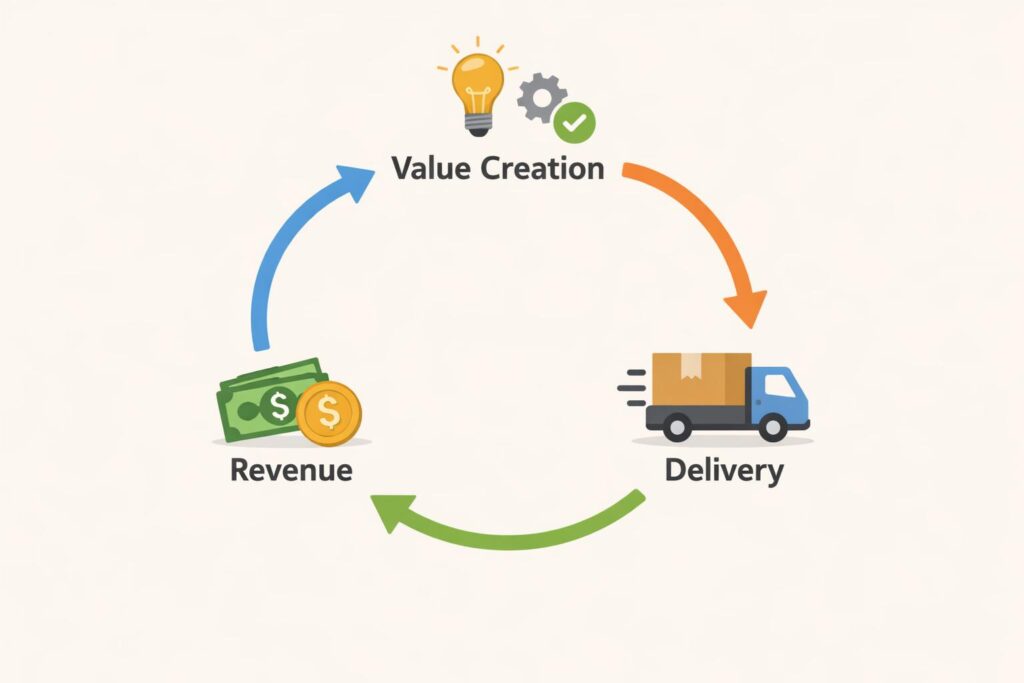
An online business model explains how three things connect: value, delivery, and money. First, you offer something useful or meaningful. Second, you deliver it in a clear way. Third, you earn income from that exchange. When these parts work together smoothly, a business becomes repeatable.
Think of a business model as a structure, not an action. Posting content once is not a model. Running ads one time is not a model. A model is what allows the same process to work again and again. It gives direction. It removes guesswork. It turns effort into a system instead of a gamble.
Model vs Platform
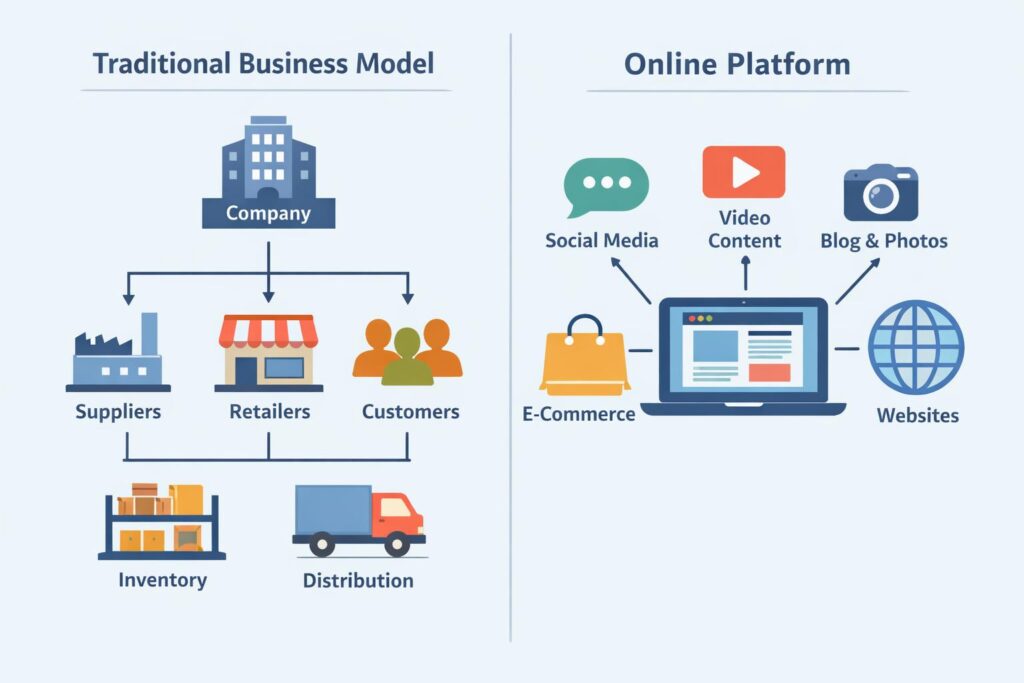
Many beginners confuse platforms with business models. Platforms like YouTube, Facebook, or online marketplaces are not models. They are tools. They help you reach people, share content, or process payments.
The model lives above the platform. For example, teaching skills, selling services, or promoting products can all work on different platforms. When a platform changes its rules, the model can still survive. That is why understanding the model matters more than choosing the platform.
A Real-Life Example
Imagine a small shop in your neighborhood. The owner buys useful products, displays them, and sells them at a fair price. The shop location is not the business model. The way value is created and exchanged is.
Online businesses work the same way. The shop just becomes digital, and the system stays familiar.
Why Beginners Often Confuse Online Business Models
Focus on Income Before Structure
Many beginners start with one goal in mind: making money as quickly as possible. That desire is understandable. The problem is that income is treated as the starting point, instead of the result. When structure is skipped, people jump between ideas, tools, and platforms without a clear plan. They try to earn first and understand later. In reality, sustainable income appears only after the foundations are clear.
This connects closely with Why Online Income Takes Time and Consistency (A Realistic Beginner Guide), which explains why rushing results often leads to frustration.
Influencer and “Quick Money” Noise
Online content makes this confusion worse. Social media is full of success stories, screenshots, and short videos promising fast results. What is rarely shown is the system behind those results. Influencers often talk about tools, platforms, or tactics, but not the underlying business logic. Beginners compare their early steps to someone else’s highlight reel and assume they are doing something wrong. This creates false expectations and rushed decisions.
Missing the System Thinking
Another common issue is treating online work as a series of isolated actions. Posting content, running ads, or joining platforms are seen as separate moves. A business model, however, is a connected process. Each step supports the next. When beginners fail to think in systems, they stay busy but don’t build momentum. Understanding the process changes everything.
The Core Components of Any Online Business Model
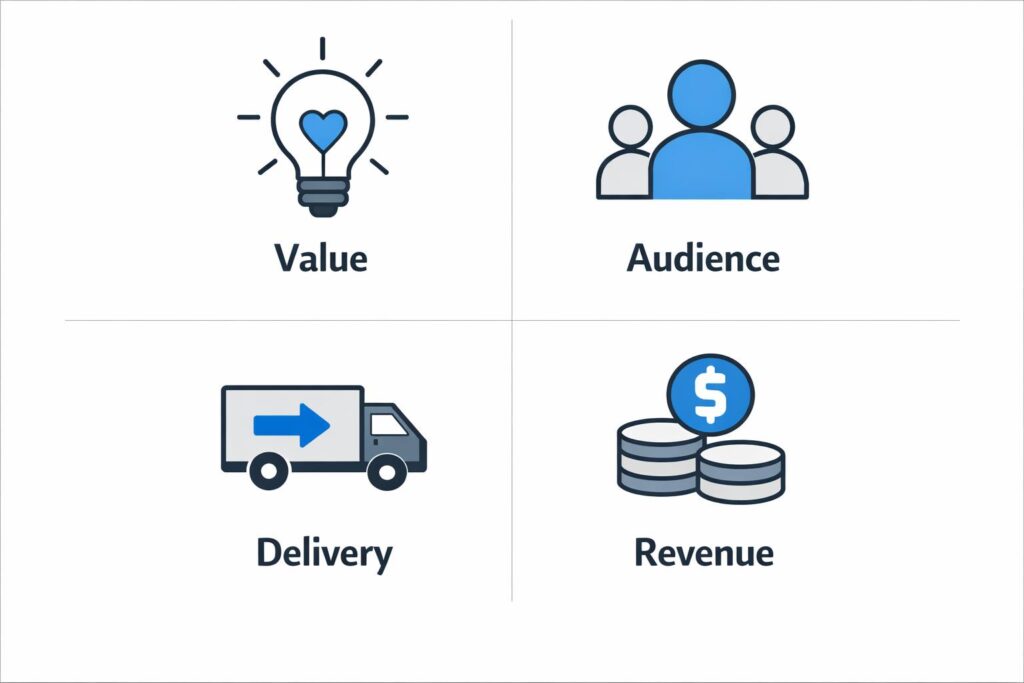
Every online business model, no matter how simple or advanced, is built on a few essential parts. When beginners understand these clearly, online business stops feeling confusing and starts making sense.
Value Creation
At the center of every model is value. This means solving a real problem or fulfilling a real need. Value is not about the product itself. It is about the outcome people care about. A tutorial saves time. A service removes stress. Helpful content reduces confusion. When value is clear, everything else becomes easier. Without value, even the best tools or platforms cannot produce results.
Audience or Market
A business model is always built for someone specific. Trying to serve everyone usually leads to serving no one well. A clear audience makes decisions simpler. It shapes the language you use, the problems you focus on, and the solutions you offer. Beginners often skip this step, but clarity here prevents wasted effort later.
Delivery Method
This is how value reaches people. It might be shared through content, offered as a service, packaged as a product, or supported by a platform. There is no single “best” method. The right choice depends on the value and the audience. Simple delivery is often better than complex setups, especially at the beginning.
Revenue Flow
This is how money enters the system. Someone pays for access, support, results, or convenience. The idea is simple. Value is given first, trust is built, and payment follows. A clear revenue path turns effort into sustainability without technical complexity.
Together, these components form a complete and understandable model.
Common Types of Online Business Models (Beginner Overview)
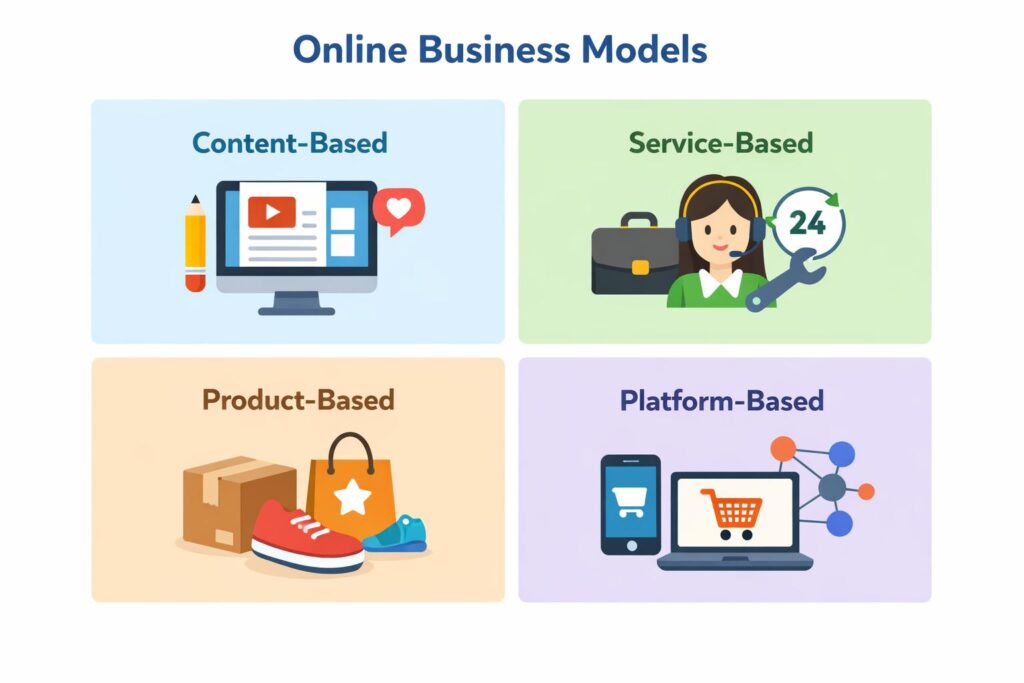
Once beginners understand what an online business model is, the next step is recognizing the most common types. These models are not shortcuts. Each one works differently and suits different skills, goals, and timelines.
Content-Based Models
Content-based models focus on creating useful or engaging content over time. This can include blogs, YouTube channels, podcasts, or email newsletters. The main asset here is attention and trust. Growth is usually slow at the beginning because content needs time to be discovered. Over time, however, strong content can attract a loyal audience. Income often comes later through ads, partnerships, or paid offers. This model rewards patience and consistency more than speed.
Service-Based Models
Service-based models are built around skills. Examples include freelancing, consulting, coaching, or offering digital services like design or writing. In this model, time and expertise are exchanged for payment. Results can come faster because clients pay directly for solutions. The limitation is scale. Income usually depends on available time unless systems or teams are added later. This model is popular with beginners because it relies on skills they already have.
If you want a deeper explanation of this path, read What Is Skill-Based Online Work? A Beginner-Friendly Guide, which explores how beginners turn skills into income step by step.
Product-Based Models
Product-based models involve selling something people can buy more than once without repeating the same work. Products can be digital, such as ebooks or courses, or physical, such as handmade items or shipped goods. Digital products are often easier to scale because delivery is automated. Physical products require logistics and inventory. Ownership is a key advantage here, but building trust and demand takes planning.
Platform-Dependent Models
These models rely heavily on third-party platforms like marketplaces or social media apps. Examples include selling on marketplaces or earning through social content platforms. The benefit is built-in traffic and easier exposure. The limitation is control. Rules, fees, or algorithms can change at any time. Many beginners start here, but long-term stability usually requires combining platforms with owned assets like a website.
Each model can work well when chosen intentionally and aligned with long-term goals.
How Online Business Models Actually Make Money
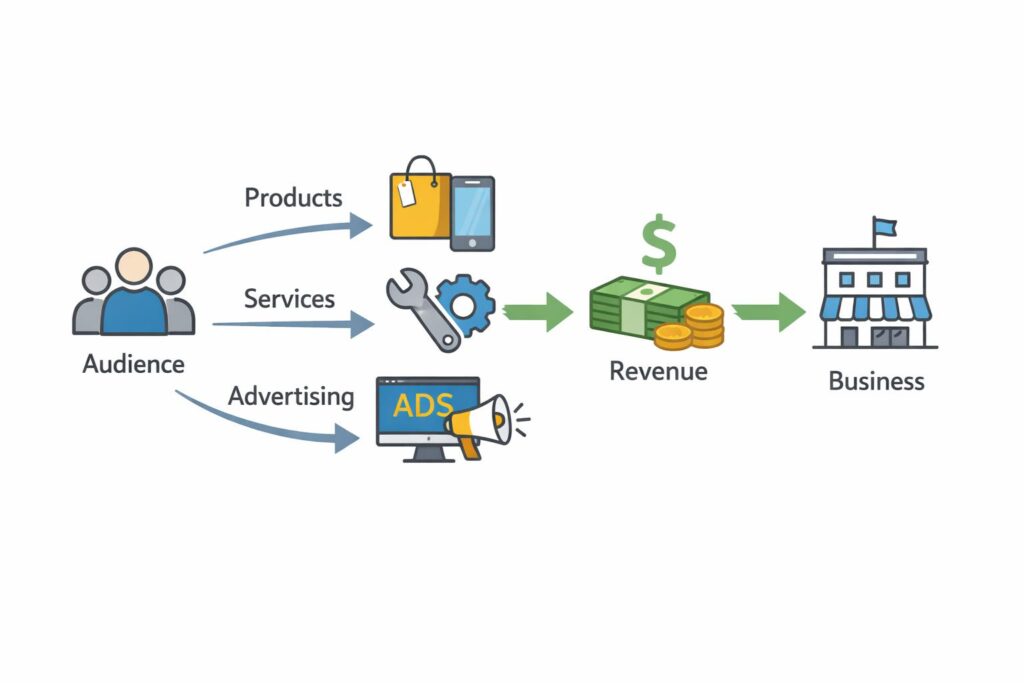
Many beginners think online businesses start with money first. In reality, money is the result, not the starting point. Every online business model earns by creating value, delivering it consistently, and only then turning that relationship into revenue. The method may differ, but the logic is always the same.
Some models earn directly. Others earn indirectly. What matters most is why people are willing to pay, not how fast payment happens. Understanding this removes a lot of confusion and unrealistic expectations.
To see how business models connect with tools, platforms, and long-term growth systems, explore Technology and Online Business – The Complete Beginner’s Guide, where the full foundation is explained in one structured roadmap.
Direct Revenue
Direct revenue is the simplest form to understand. A person pays you directly for something clear.
This usually happens when you sell:
A service, such as freelancing, consulting, or coaching
A product, such as a digital guide, software, or physical item
The exchange is straightforward. Someone has a problem. You offer a solution. Money changes hands.
For beginners, this model feels logical because the connection between work and income is visible. However, it often requires skills, time, or personal involvement, especially in the early stages.
Indirect Revenue
Indirect revenue works differently. Money comes through a third path, not straight from the audience.
Common examples include:
Advertising shown on content
Affiliate commissions from recommended tools or products
Partnerships and sponsorships
Here, the audience is not paying you directly. Instead, businesses pay for access to trust, attention, or influence you have built over time.
This model rewards patience more than speed.
Why Revenue Comes Last
Online revenue depends on trust before transactions. People rarely pay first and trust later.
Beginners who focus only on income often skip the foundation: clarity, consistency, and credibility. Sustainable online business models think long-term. When trust is built, revenue becomes a natural outcome, not a struggle.
Choosing the Right Online Business Model as a Beginner

Choosing an online business model is one of the most important early decisions a beginner makes. Many people rush this step and end up switching directions repeatedly. The goal at the beginning is not perfection. It is alignment, clarity, and momentum. A good beginner model should feel manageable, understandable, and realistic within your current situation.
The strongest choice is usually the one that matches who you are now, not who you hope to become later. As skills grow, models can evolve. But the first model should reduce pressure, not increase it.
Skills vs Interests
Beginners often hear “follow your passion,” but skills matter more at the start. Interest helps motivation, but skills create value. If you already write well, content-based models make sense. If you communicate clearly, service-based models may fit better.
The best beginner choice sits at the overlap: something you are curious about and capable of learning quickly. You do not need expertise. You need a starting advantage.
Time vs Money Trade-Off
Some models require more time than money, such as blogging or content creation. Others reduce time by requiring upfront costs, like paid tools or inventory. Beginners should usually favor time-based models. Time builds understanding. Understanding reduces mistakes.
Fast results are tempting, but long-term growth is built slowly and deliberately.
Simplicity Over Complexity
Complex models fail beginners more often than bad ideas. Simple models are easier to manage, improve, and stick with. When the system is clear, progress becomes measurable. Early wins come from clarity, not complexity.
Common Myths About Online Business Models
Online business models are often misunderstood, especially by beginners who are exposed to oversimplified advice online. These myths create unrealistic expectations and lead many people to abandon good ideas too early. Understanding what doesn’t work is just as important as knowing what does.
Clearing these misconceptions helps beginners make calmer, smarter decisions and avoid unnecessary frustration.
“One Model Fits Everyone”
There is no universal online business model that works for all people. Every model depends on personal factors such as skills, time availability, learning speed, and goals. What works well for a full-time creator may fail for someone with limited hours.
Personalization matters because online business is not just technical. It is human. Choosing a model that fits your current situation increases consistency, which matters more than the model itself.
“More Models Mean More Income”
Many beginners believe running multiple models at once increases income potential. In reality, it usually creates confusion and burnout. Divided attention slows learning and weakens results.
Focus allows depth. Depth builds trust. Trust leads to income. One well-understood model will outperform several poorly managed ones.
“Tools Create the Business”
Tools are often marketed as the solution. They are not. Tools support a business model, but they do not replace thinking, structure, or value creation.
Without a clear model, tools only add complexity. For beginners, clarity always comes before technology.
How Online Business Models Support Long-Term Online Success
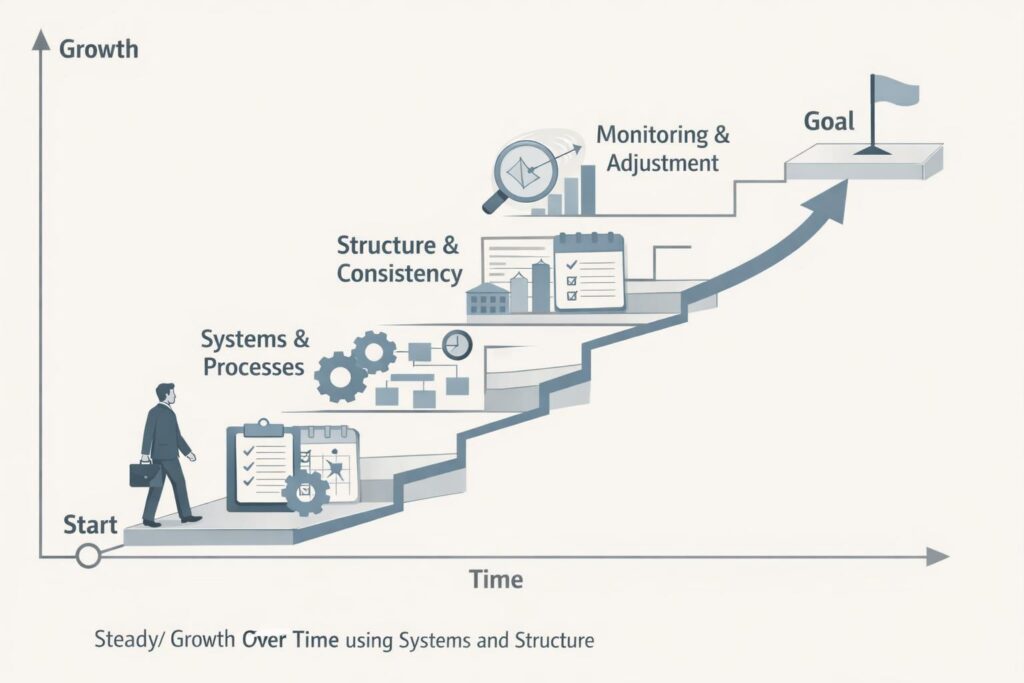
Online success rarely comes from random effort. It comes from structure. A clear online business model gives that structure and turns scattered actions into a system that can grow over time. For beginners, this is what separates short-term excitement from long-term progress.
Instead of guessing what to do next, a model provides direction. It answers how value is created, who it serves, and how results are measured. That clarity reduces stress and increases confidence.
Consistency and Predictability
Business models create stability because they are repeatable. When the same actions lead to similar outcomes, planning becomes easier. Beginners stop relying on luck and start understanding cause and effect.
Predictability does not mean fast results. It means knowing what to focus on today, next week, and next month. Over time, this consistency compounds into real progress.
Growth Without Burnout
Without a model, online work often feels like constant hustle. Posting everywhere. Trying everything. Chasing trends. This leads to exhaustion.
A clear model replaces chaos with systems. Systems reduce decision fatigue. They allow growth through routine instead of pressure. Beginners can improve steadily without feeling overwhelmed.
Frequently Asked Questions (FAQ)
Do beginners really need a business model?
Yes. A business model gives beginners direction. Without it, online efforts often feel random. A simple model helps you understand what to focus on and why certain actions matter. It reduces confusion and prevents wasted time on tools or platforms that do not fit your goals.
Can someone start without money?
In many cases, yes. Some online business models rely more on time, skills, or consistency than upfront spending. Content-based and service-based models often allow beginners to start with minimal costs. However, starting without money usually means progress is slower, not impossible.
Is affiliate marketing a business model or a strategy?
Affiliate marketing is best understood as a revenue strategy, not a full business model. It fits inside different models, such as content or platform-based businesses. The model defines the system. Affiliate links are just one way money enters that system.
How long does it take for a model to work?
There is no fixed timeline. Some models show small results within months, while others take longer to mature. What matters most is consistency and clarity. A clear model helps you measure progress instead of guessing whether something is working.
Can one model change over time?
Absolutely. Many successful online businesses evolve. Beginners often start simple and adjust their model as skills, audience, and opportunities grow. Change is normal when the foundation is clear and intentional.
Conclusion – Online Business Models Are About Clarity, Not Complexity
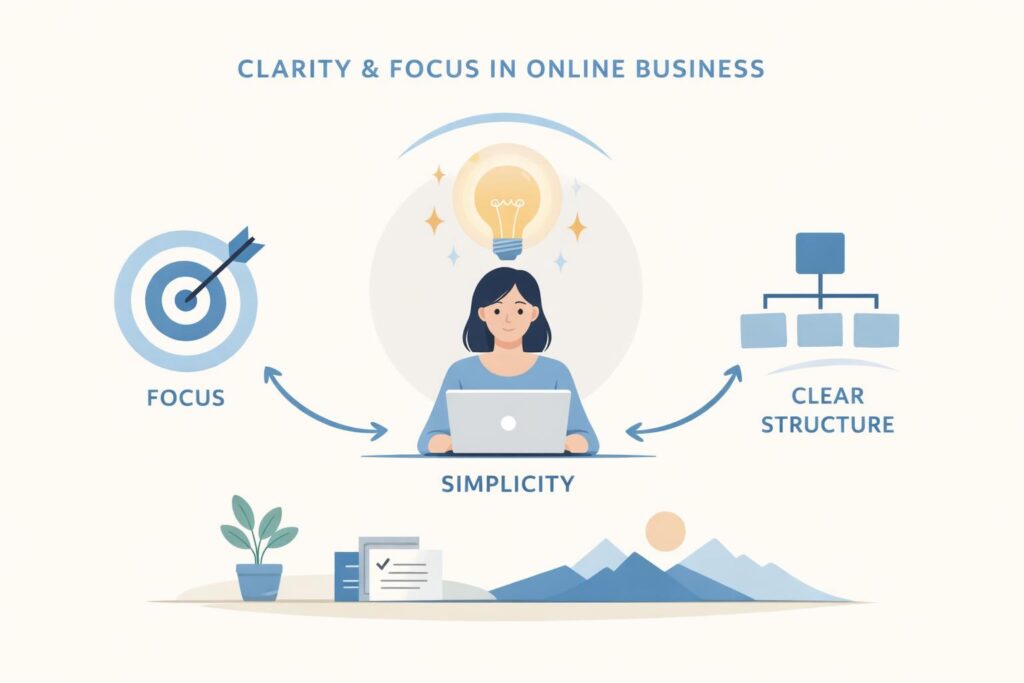
Most online success does not begin with tools, platforms, or trends. It begins with understanding. When beginners know how value is created, delivered, and paid for, online business stops feeling mysterious. A clear business model turns scattered effort into focused action.
One of the biggest advantages of a model is that it reduces confusion. Instead of trying everything at once, beginners can see what matters now and what can wait. This saves time, energy, and motivation. It also helps avoid the frustration that comes from copying others without knowing why something works.
Perfection is not required at the start. Direction is. A simple model gives beginners a starting point they can build on. As skills grow and experience increases, the model can improve naturally. Progress comes from movement, not over planning.
Starting simple creates momentum. Momentum builds confidence. And confidence makes online business feel realistic instead of overwhelming. With a clear model in place, beginners can approach online work calmly, make better decisions, and grow at a steady pace. Online business becomes manageable when clarity comes first.




8 Comments on “What Is an Online Business Model? Simple Guide for Beginners”